
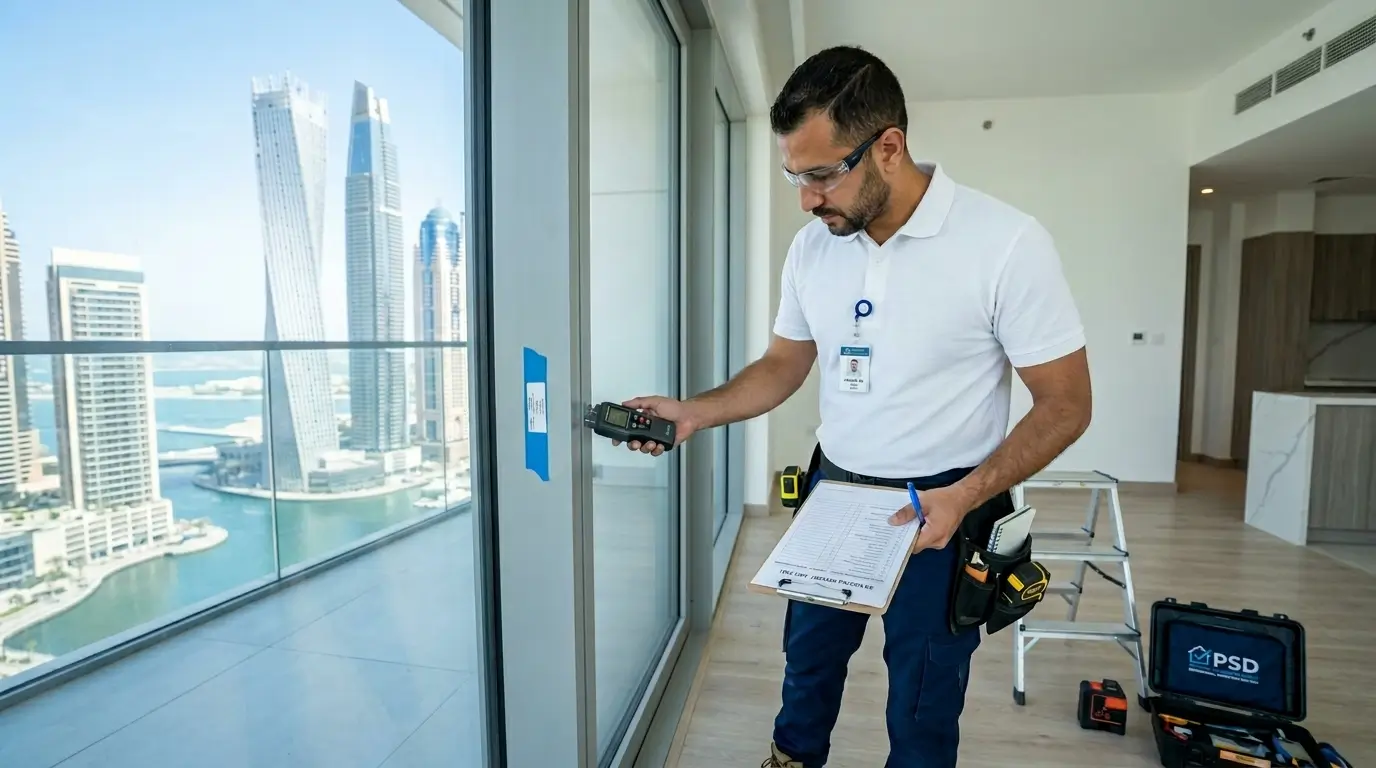
Snagging and handover — a checklist for new Dubai homes
The moment you receive the keys to a new apartment in Dubai Marina, a villa in Arabian Ranches, or a townhouse in DAMAC Hills is charged with anticipation—but i
A thorough handover inspection can save you years of frustration and protect tens of thousands of dirhams in remedial costs.

Introduction
The moment you receive the keys to a new apartment in Dubai Marina, a villa in Arabian Ranches, or a townhouse in DAMAC Hills is charged with anticipation—but it is also the single most critical window for identifying defects before formal handover. Dubai's real estate framework, governed by Law No. 27 of 2007 and RERA regulations, affords buyers explicit warranty protection: one year for contractor defects and ten years for structural elements. Yet these safeguards are meaningful only if you document issues systematically during the snagging inspection. Developers such as Emaar, DAMAC, Meraas, and Nakheel typically allow a pre-handover walk-through, and experienced buyers know that a methodical checklist—covering mechanical, electrical, plumbing systems, finishes, and waterproofing—is as important as the sales-and-purchase agreement itself. This guide walks you through the technical and administrative steps to ensure your new home meets the standards you paid for.
Understanding Dubai's warranty structure and defect-liability periods
Dubai's regulatory framework establishes two tiers of warranty coverage that every off-plan buyer should understand before stepping into a unit. The first is the one-year contractor defect-liability period, during which the developer or main contractor is obliged to remedy workmanship issues, finish imperfections, and minor MEP faults at no cost to the owner. This period begins on the date of handover, not the date of final payment, so timely reporting is essential. The second layer is the ten-year structural warranty, which covers load-bearing elements, foundations, major structural components, and façade integrity. Both warranties are mandated under RERA guidelines and are typically referenced in your sale agreement and handed over as part of the completion documentation.
In practice, most developers in established communities—Dubai Hills Estate, Town Square, or Bluewaters Island—maintain dedicated customer-care or defect-liability teams tasked with logging and rectifying snagging items. Response times can vary: some groups dispatch technicians within 48 hours for critical defects (water leaks, electrical faults), while cosmetic items may take weeks to schedule. Understanding these timelines helps you prioritise your punch list and ensures you escalate urgent matters immediately. Keep copies of all correspondence, photographs, and signed handover forms; these become your evidence trail if a dispute arises or if you later decide to sell and need to demonstrate that defects were professionally resolved.

The room-by-room MEP inspection: mechanical, electrical, plumbing
Mechanical, electrical, and plumbing systems are the lifeblood of modern Dubai apartments and villas, yet they are also the most frequent sources of post-handover complaints. Begin your snagging tour in the main electrical panel: verify that all circuit breakers are labelled, that distribution boards are flush-mounted without exposed wiring, and that residual-current devices (RCDs) trip correctly when tested. Move methodically through each room, testing every power socket, light switch, and dimmer. Check for loose face-plates, scorched outlets, or flickering LED downlights—any of which may indicate poor connections or substandard fittings.
In the kitchen and bathrooms, turn on all taps and showerheads at full pressure to confirm consistent water flow and temperature mixing. Look beneath sinks and vanity units for moisture, corrosion, or improvised sealant patches that suggest earlier leaks. Flush toilets multiple times to ensure cisterns refill properly and that waste pipes drain without gurgling or backflow. Air-conditioning is especially critical in the UAE climate: run each zone for at least fifteen minutes, listen for unusual noises from the fan-coil units, and inspect ceiling diffusers for even airflow and clean grilles. In villas and larger townhouses, request access to the outdoor condenser units to verify proper installation, secure mounting, and that refrigerant lines are insulated and clipped neatly.
Document every anomaly with dated photographs and written notes cross-referenced to your floor plan. Developers will often ask you to sign a snagging form on the spot; never sign a blank or incomplete list, and retain a copy of every page you initial. If you lack technical confidence, consider engaging an independent snagging consultant—fees typically range from AED 1,500 to AED 3,500 depending on unit size—and the investment often pays for itself by catching hidden issues that untrained eyes miss.
Finishes, tiles, waterproofing: the details that define quality
While MEP systems are functional imperatives, the quality of finishes and the integrity of waterproofing define your day-to-day living experience and the long-term value of your asset. Start with flooring: marble and porcelain tiles should be level, uniformly grouted, and free of lippage—the condition where adjacent tile edges sit at different heights. Run your hand along grout lines to feel for voids or crumbling, which can allow water ingress over time. In wet areas—shower enclosures, balcony thresholds, kitchen splashbacks—waterproofing membranes are legally required but not always visible. Look for soft spots, discolouration, or efflorescence (white salt deposits) on adjacent walls, all of which signal moisture penetration.
Joinery deserves close attention. Open and close every kitchen cabinet, wardrobe door, and drawer; hinges should operate smoothly, soft-close mechanisms should engage, and internal surfaces should be finished and clean. Check for alignment: doors should sit flush within their frames, and handles should be secure. Countertops—whether quartz, granite, or solid surface—must be polished evenly, with mitred joints tight and level. Inspect window and door seals: rubber gaskets should be intact, frames should be square, and glazing should be free of scratches or trapped condensation between panes. In Dubai's dust-laden environment, even minor seal failures will admit fine particles and compromise air-conditioning efficiency.
Paint finishes are often treated as cosmetic, but uneven coverage, drips, overspray on fixtures, and poorly cut edges around ceilings and skirting betray rushed workmanship. Use a torch held at an oblique angle to reveal surface imperfections on walls. Exterior elements—balcony railings, façade cladding, window sills—must be checked for secure fixing, complete sealant beads, and proper drainage channels to prevent ponding. Waterproofing failure is one of the costliest post-handover defects to remedy, so insist on rectification during the liability period rather than hoping minor damp patches will resolve themselves.
Coordinating with the developer's defect-liability team
Once your snagging inspection is complete and your punch list compiled, the administrative phase begins. Most reputable developers operate formal defect-management portals or dedicated customer-service desks where you submit your list, typically within seven to fourteen days of handover. Emaar's after-sales teams, for example, use digital ticketing systems that assign reference numbers, track progress, and notify you when technicians are scheduled. Smaller or newer developers may rely on email or WhatsApp groups; in such cases, send your list as a PDF attachment with photographs embedded, and request written acknowledgement of receipt.
Prioritise your items by severity: "Category A" for urgent defects affecting habitability—water leaks, electrical hazards, HVAC failure—and "Category B" for cosmetic or minor issues. Urgent matters should be flagged in your initial communication and followed up within 48 hours if no response is received. Maintain a polite but firm tone in all correspondence; remember that site managers and customer-care personnel are intermediaries, not adversaries. If weeks pass without remedial action, escalate through the developer's hierarchy: project director, sales director, and ultimately the executive office.
Retain a detailed log: date of each site visit by contractor teams, names of technicians, work performed, and whether you consider each item resolved. Before signing off on any repair, inspect it personally and test functionality. Developers will eventually request a final sign-off, releasing them from further liability for listed defects; do not sign this document until you are genuinely satisfied. If disputes remain unresolved at the end of the one-year period, you have recourse through RERA's dispute-resolution mechanisms or Dubai Courts, though both routes require contemporaneous evidence—your timestamped correspondence and photographs.
Practical takeaways
-
Book your snagging appointment early: Schedule your pre-handover inspection at least two weeks before the contractual handover date to allow time for rectifications.
-
Bring a comprehensive checklist and tools: Download or purchase a detailed snagging template; carry a torch, tape measure, spirit level, electrical socket tester, and a notepad or tablet for photographs.
-
Test every system under realistic conditions: Run taps, showers, and appliances for at least ten minutes; turn on all air-conditioning zones; open and close every door, window, and drawer.
-
Document everything in writing and images: Date-stamped photographs and a signed, itemised punch list form your legal record; never rely on verbal assurances alone.
-
Engage a professional if uncertain: Independent snagging inspectors typically charge AED 1,500–3,500 but bring technical expertise that can identify hidden defects and strengthen your negotiating position with the developer.
Frequently asked questions
What happens if the developer refuses to fix items on my snagging list?
If a developer disputes liability or delays rectification, escalate internally first—through the project director or executive office. If the issue remains unresolved and falls within the one-year contractor warranty or ten-year structural warranty, you can file a complaint with RERA or initiate formal dispute resolution through Dubai Courts. Contemporaneous documentation—emails, photographs, signed punch lists—is essential to substantiate your claim.
Can I refuse handover if too many defects are present?
Yes, but do so formally and in writing. If critical defects render the unit uninhabitable—major water leaks, non-functional electrical systems, missing fixtures—you are within your rights to defer handover until these are remedied. Specify the issues clearly and propose a revised handover date. Be aware that some sale agreements penalise late handover acceptance, so review your SPA and consult legal counsel if necessary.
Should I hire a snagging consultant, or can I inspect the unit myself?
For buyers with construction or technical backgrounds, self-inspection using a comprehensive checklist may suffice. However, independent snagging professionals bring trained eyes, calibrated tools, and familiarity with common developer shortcuts. For villas, penthouses, or high-value units, the fee—usually between AED 1,500 and AED 3,500—is modest insurance against costly remedial work down the line and often uncovers issues that untrained buyers overlook.
Speak to Point Penta
Snagging is not an adversarial process—it is a structured quality-assurance step that protects your investment and ensures your new home meets the standards promised in glossy brochures and show flats. At Point Penta, we guide buyers through every stage of the off-plan journey, from initial reservation through handover and beyond. Our team understands the technical nuances of Dubai's construction landscape and can recommend trusted snagging consultants, coordinate with developer liaison teams, and help you navigate warranty claims if issues arise post-handover. Visit us at 902, Ithra Tower, Al Garhoud, Dubai, or reach out by email at info@pointpenta.com or by phone on +971 55 739 6664. Let us help you turn your new-build purchase into a home you can enjoy with confidence.
Point Penta’s research desk publishes editorial market analysis every week. If you’re looking at property in Dubai, an advisor will share the full sales pack — inventory, comparables and the current pricing band — within one business day.
More from the desk

Palm Jumeirah at 25 — how the crescent is evolving in 2026 — updated view
When Nakheel's master-planned archipelago opened its trunk road in 2007, Palm Jumeirah became shorthand for ambition: signature villas, private beaches, and the
Dubai vs Abu Dhabi property — a side-by-side 2026 comparison
Dubai and Abu Dhabi sit less than 140 kilometres apart, yet their property markets could not be more distinct. Dubai has long been the region's commercial and l
Corporate relocation to Dubai — housing budgets, communities and lease structures
Dubai's corporate relocation landscape has matured considerably over the past decade, transforming from ad-hoc packages into structured frameworks that balance