
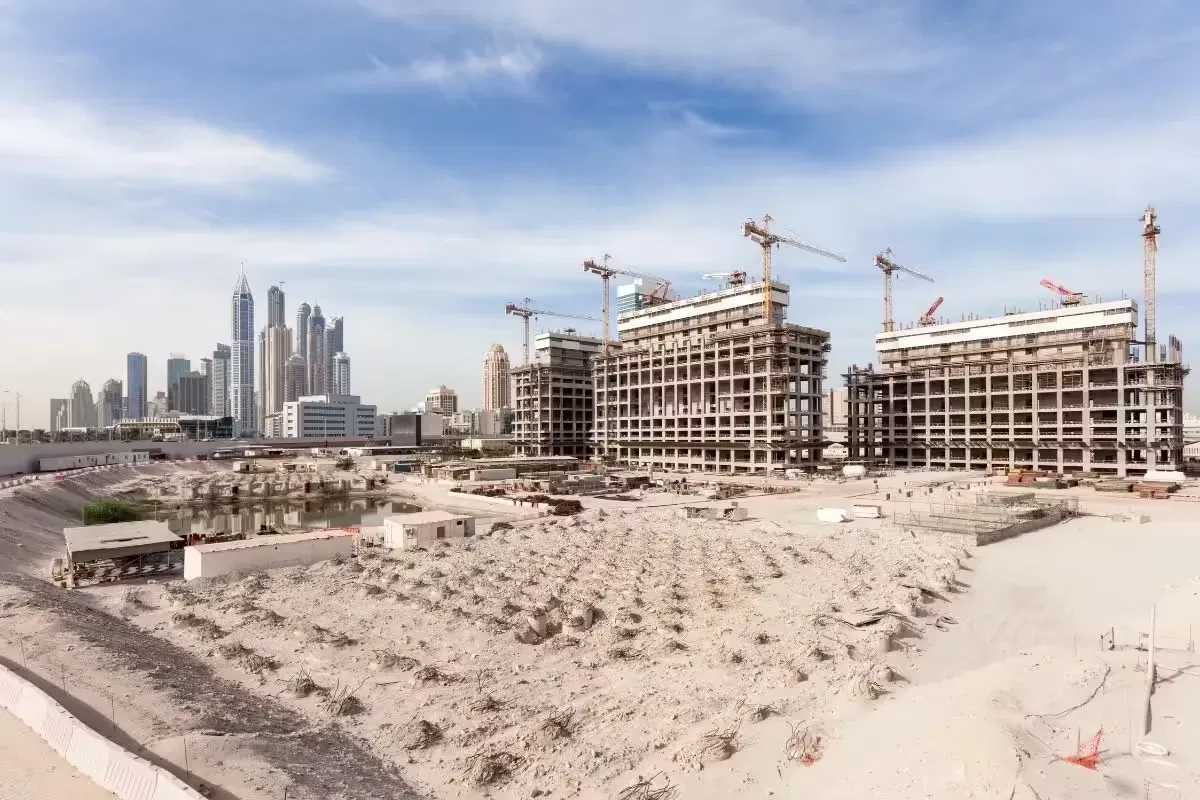
Off-plan vs ready — which wins in 2026?
The question of whether to buy off-plan or ready property in Dubai has never been binary, yet 2026 brings fresh variables into the calculation. Off-plan offerin
Off-plan vs ready — which wins in 2026?
Dubai's property market offers two distinct pathways to ownership — and the right choice depends less on timing than on your financial structure and risk appetite.
Introduction
The question of whether to buy off-plan or ready property in Dubai has never been binary, yet 2026 brings fresh variables into the calculation. Off-plan offerings from established developers such as Emaar, DAMAC, and Nakheel continue to dominate supply pipelines across communities like Dubai Hills Estate, Dubai Creek Harbour, and Town Square, often bundled with post-handover payment plans and competitive service-charge holidays. Meanwhile, ready units in mature clusters — Business Bay, Dubai Marina, Jumeirah Village Circle — deliver immediate rental cash flow and full visibility on build quality. Both routes carry advantages and trade-offs; neither is universally superior. What matters is alignment between the product type, your liquidity profile, income expectations, and tolerance for construction-phase uncertainty. This journal post examines the mechanics, risks, and financial break-even scenarios for each, equipping you to make an informed decision grounded in UAE market realities rather than developer marketing.
The off-plan proposition: leverage, flexibility, and deferred capital
Off-plan purchases in Dubai typically require 20–30 per cent down payment — sometimes as low as 10 per cent for select launches — followed by staged instalments tied to construction milestones. Many developers extend post-handover plans spanning two to five years, effectively allowing buyers to secure an asset today and defer the bulk of capital outlay until rental income begins. This structure offers powerful leverage: you control an appreciating asset while deploying only a fraction of its total price upfront.
Incentives further sweeten the proposition. Waived registration fees, complimentary furniture packages, service-charge holidays, and guaranteed rental yields (often 6–8 per cent for a limited period) are common in competitive launches. For investors with moderate liquidity who anticipate capital growth during the construction window, off-plan can function as a quasi-leveraged play — your deposit appreciates alongside the broader unit value, and completion often coincides with a market that has moved upward.
However, this route introduces construction risk. Delays, though less frequent among Tier-1 developers regulated under RERA's escrow framework, remain possible. Quality variances between show units and delivered apartments occasionally surface. And should the market soften during the 18–36 month build cycle, you may find yourself locked into a commitment at yesterday's pricing while comparable ready stock trades lower.
The ready alternative: immediate yield, complete transparency, no construction lag
Ready properties — whether resale units in established towers or developer-held completed inventory — eliminate construction uncertainty entirely. What you tour is what you own. Snagging reports, building management track records, community maturity, and actual (not projected) service charges are all knowable before you sign the sale-and-purchase agreement.
Crucially, ready units generate rental income from day one. In high-demand precincts such as Dubai Marina, Downtown Dubai, or Business Bay, a two-bedroom apartment might achieve annual gross yields in the range of 5–7 per cent, depending on specifications and proximity to Metro stations or waterfronts. That yield begins accruing immediately, offsetting mortgage costs or providing positive carry for cash buyers. For landlords prioritising stable cash flow — perhaps expatriates purchasing before relocation, or retirees seeking income-producing assets — this immediacy outweighs speculative appreciation bets.
Financing is also more straightforward. UAE banks generally offer higher loan-to-value ratios and more favourable rates on completed properties than on off-plan stock, reflecting lower perceived risk. Appraisals are based on actual comparables rather than future projections, and the mortgage approval process is faster. If liquidity is tight and you need certainty around both acquisition cost and income timeline, ready property provides a cleaner, more predictable structure than phased payment plans ever can.
Break-even arithmetic: when does each pathway pay off?
Consider a hypothetical scenario: a one-bedroom apartment in Jumeirah Village Circle priced at AED 850,000 off-plan versus an equivalent ready unit at AED 920,000. Off-plan terms might require 20 per cent down (AED 170,000) plus staged payments over 24 months, with handover in Q2 2027. The ready unit can be mortgaged immediately, generating rental income of roughly AED 55,000–60,000 per annum from month one.
By the time the off-plan unit hands over in mid-2027, the ready buyer will have collected approximately AED 110,000–120,000 in gross rent (less service charges and minor vacancy). That income stream narrows the AED 70,000 price premium considerably — perhaps to AED 20,000–30,000 net, depending on actual yields and costs. Meanwhile, the off-plan buyer enjoyed lower initial outlay and potential capital appreciation during construction; if the market rises 8–10 per cent over those two years, the off-plan unit may be worth AED 920,000–935,000 at handover, erasing the paper discount.
Break-even thus hinges on three variables: price differential at purchase, market movement during construction, and opportunity cost of foregone rental income. In a rising market with generous developer incentives, off-plan often wins on total return. In a flat or softening market where rental yields remain robust, ready property's immediate income and zero construction risk prove more compelling. Neither outcome is guaranteed — which is precisely why both products coexist and serve distinct investor profiles.
Risk, liquidity, and portfolio fit
Off-plan suits buyers who can afford to lock capital for 18–36 months, possess confidence in the developer's delivery record, and believe medium-term price appreciation will outpace immediate rental returns. It also appeals to those assembling a portfolio over time: lower entry costs mean you can acquire multiple units with the same capital base, diversifying across communities and handover dates.
Ready property, conversely, fits income-focused investors, first-time buyers prioritising certainty, or purchasers requiring mortgage financing on favourable terms. It also serves families planning imminent relocation — you can move in within weeks rather than waiting years. Liquidity is another dimension: ready units generally trade faster in secondary markets because buyers see completed product and can secure bank valuations without projection risk.
Neither choice precludes the other. Sophisticated portfolios often blend both: off-plan allocations capture growth during construction booms, while ready holdings generate steady yield and provide liquidity buffers. The optimal mix depends on your total capital, income requirements, timeline, and whether you view Dubai property as a speculative play, a cash-flow engine, or a combination of the two. Recognising this spectrum — rather than treating the decision as binary — leads to better long-term outcomes.
Practical takeaways
1.Calculate net opportunity cost: Subtract foregone rental income and any post-handover interest from the off-plan price discount to determine true cost advantage. 2.Verify developer track record: Review past handover timelines, check RERA registration, and tour completed projects by the same developer before committing off-plan. 3.Stress-test your liquidity: Ensure you can absorb staged payments and potential handover delays without distress; off-plan requires buffer capital beyond the payment schedule. 4.Compare financing terms: Obtain indicative mortgage offers for both ready and off-plan scenarios — LTV, rates, and appraisal assumptions often differ materially. 5.Diversify by product type: If capital allows, consider holding both off-plan and ready units to balance growth exposure with immediate income and liquidity.
Frequently asked questions
Can I sell an off-plan unit before handover?
Yes, subject to developer consent and RERA's Oqood transfer process. Some developers charge a nominal admin fee (typically AED 5,000–10,000) and may require you to have completed a minimum percentage of payments — often 30 per cent. Pre-handover flipping can be profitable in rising markets but carries liquidity risk if buyer demand softens or if the developer imposes restrictive transfer clauses. Always review your sale-and-purchase agreement for transfer provisions before assuming you can exit mid-construction.
Do off-plan properties appreciate faster than ready stock?
Not inherently. Off-plan units may appear to appreciate during construction because initial pricing was below prevailing market rates — a discount developers offer to attract early buyers and secure construction financing. However, if the broader market stagnates or declines during the build period, off-plan buyers may find handover prices align with or fall below ready comparables. True appreciation depends on supply-demand dynamics, location, and developer reputation rather than the property's completion status at purchase.
Which option offers better long-term capital growth?
Long-term growth correlates more strongly with location, community maturity, and infrastructure development than with purchase type. Off-plan in emerging corridors — for example, Dubai South or Dubailand — may outperform if master-plan execution succeeds, but carries higher execution risk. Ready property in established zones like Dubai Marina or Palm Jumeirah offers lower volatility and proven demand. Diversification across both types and multiple locations typically delivers superior risk-adjusted returns over a ten-year horizon.
Speak to Point Penta
Choosing between off-plan and ready property is less about market timing and more about aligning product characteristics with your financial goals, liquidity, and risk tolerance. At Point Penta Real Estate, we help buyers, investors, and relocating families decode these trade-offs through transparent analysis and a portfolio lens — not sales pressure. Whether you're evaluating a Dubai Hills launch or a completed Marina tower, our research-led approach ensures your decision rests on verifiable data and realistic cash-flow projections. Visit us at 902, Ithra Tower, Al Garhoud, Dubai, or reach out by email at info@pointpenta.com or by phone at +971 55 739 6664. We'd welcome the conversation.

Point Penta’s research desk publishes editorial market analysis every week. If you’re looking at property in Dubai, an advisor will share the full sales pack — inventory, comparables and the current pricing band — within one business day.
More from the desk

Palm Jumeirah at 25 — how the crescent is evolving in 2026 — updated view
When Nakheel's master-planned archipelago opened its trunk road in 2007, Palm Jumeirah became shorthand for ambition: signature villas, private beaches, and the
Dubai vs Abu Dhabi property — a side-by-side 2026 comparison
Dubai and Abu Dhabi sit less than 140 kilometres apart, yet their property markets could not be more distinct. Dubai has long been the region's commercial and l
Corporate relocation to Dubai — housing budgets, communities and lease structures
Dubai's corporate relocation landscape has matured considerably over the past decade, transforming from ad-hoc packages into structured frameworks that balance