MBR City guide — Sobha Hartland, District One and the Meydan hinterland
Mohammed Bin Rashid City—often abbreviated to MBR City—occupies roughly 54 million square feet between Al Khail Road and Nad Al Sheba, bracketed to the west by
MBR City guide — Sobha Hartland, District One and the Meydan hinterland
Mohammed Bin Rashid City has quietly grown from a long-range masterplan into Dubai's definitive address for families who refuse to choose between schools, green space and a resale-ready postcode.
Introduction
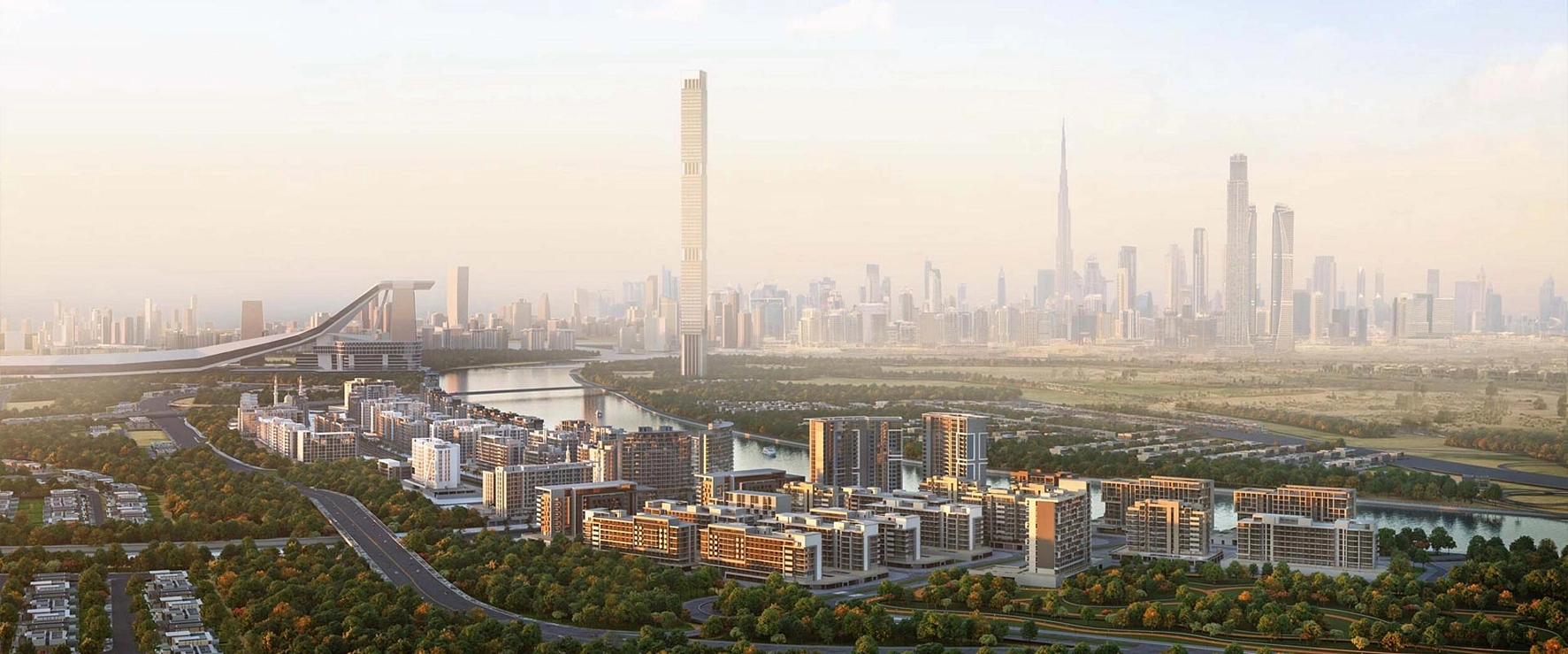
Mohammed Bin Rashid City—often abbreviated to MBR City—occupies roughly 54 million square feet between Al Khail Road and Nad Al Sheba, bracketed to the west by the Downtown skyline and to the east by the Meydan racecourse. Unlike the high-rise corridors of Business Bay or the villa sprawl of Jumeirah, MBR City was conceived as a low-rise, mixed-use district centred on parkland, culture and walkability. In practice, it has become shorthand for three distinct sub-markets: Sobha Hartland, with its cluster of international schools and linear green spine; District One, the Crystal Lagoon enclave developed by Meydan; and a scattering of Nad Al Sheba villa plots and townhouse rows that appeal to buyers seeking a little more elbow room and a lower per-square-foot entry point. Together, these neighbourhoods form what many brokers now call Dubai's new luxury heartland—a term that, for once, sits comfortably with the reality on the ground.
Sobha Hartland: the school-run sanctuary
Sobha Hartland was among the first parcels in MBR City to be handed over at scale, and it has aged gracefully. Developed by Sobha Realty, the 8-million-square-foot community wraps around Hartland Park—a landscaped corridor that runs north–south and offers jogging tracks, play areas and enough open grass to feel genuinely suburban. What sets Hartland apart is not amenity density but proximity: Hartland International School sits inside the gates, GEMS Wellington Academy – Al Khail is a five-minute drive west, and Repton School Dubai lies just across the creek bridge in Nad Al Sheba. That concentration has made Sobha Hartland unusually popular with expatriate families who prioritise the morning commute over marina views.
Typologies range from two-bedroom townhouses to five-bedroom standalone villas, most delivered between 2018 and 2021. Illustrative asking prices for three-bedroom townhouses typically fall in the AED 2.2–2.8 million range, while four- and five-bedroom villas can reach AED 4.5–6 million depending on plot size and water frontage. Resale stock moves steadily; inventory is limited, service charges are predictable, and the community has avoided the rental oversupply that plagues newer off-plan clusters. For buyers who value an established streetscape and a functioning residents' association, Hartland remains one of the safer plays in the wider MBR City portfolio.
District One: the Crystal Lagoon and its premium
District One occupies the southern sweep of MBR City and is best known for a single, photogenic amenity: the 7-kilometre Crystal Lagoon that winds through the community's core. Developed by Meydan in partnership with Master Developer (now Wasl Properties), District One was marketed as ultra-low-density living—mansions set back from wide, tree-lined boulevards, each plot享有 either lagoon, park or fairway views. The original vision called for just over 1,500 units across multiple phases; handovers began in 2017, and construction is still rolling out in the northern parcels.
The lagoon itself is swimmable, sand-fringed and maintained to resort standard, which explains much of the price premium. Entry-level configurations—typically four-bedroom villas on smaller plots—start around AED 8–10 million, while lagoon-front mansions with private beach access routinely list above AED 20 million. District One has attracted a mix of owner-occupiers and international buyers parking wealth in a stable, freehold title; rental yields are modest—often in the 3.5–4.5 per cent band—but capital appreciation has been consistent since handover, buoyed by scarcity and the community's reputation as a finished, functioning enclave rather than a construction zone.
The trade-off is isolation. District One has limited retail within its gates, minimal pedestrian connection to neighbouring districts, and a car dependency that may frustrate buyers accustomed to mixed-use urbanism. It is, by design, a private-estate experience transposed onto a desert plot—and it works precisely because that is what its audience expects.
Nad Al Sheba villas and the Meydan hinterland
Beyond the gates of District One and north of the racecourse, a patchwork of villa communities collectively known as Nad Al Sheba (or sometimes "the Meydan hinterland") offers a quieter, less branded alternative. These include Nad Al Sheba 1, 2 and 3, as well as smaller enclaves like Meydan Gables and The Polo Residences. Plot sizes are generous—often 5,000–10,000 square feet—and architectural styles vary from neo-Andalusian to glass-box contemporary. Many plots were sold as land-and-build packages a decade ago, resulting in a pleasantly heterogeneous streetscape rather than the cookie-cutter uniformity of newer master-plans.
Pricing in Nad Al Sheba depends heavily on finish quality and exact location. Villas in Nad Al Sheba 1, closer to Ras Al Khor Road and the future Meydan One complex, typically ask between AED 3.5–6 million for four- to five-bedroom configurations. Nad Al Sheba 3, further east and abutting open desert, skews slightly lower—often AED 3–4.5 million for similar typologies. Rental demand is steady, driven by families drawn to Repton School Dubai and the area's equestrian facilities, though service-charge structures are less standardised than in Sobha Hartland or District One, and some sub-communities lack cohesive landscaping or gate security.
The hinterland's chief virtue is space—both horizontal and temporal. Traffic is light, street parking abundant, and the sense of being on the urban edge rather than in it appeals to buyers who remember early Arabian Ranches or Springs. It is not for everyone, but for the right household it offers excellent value per built square foot.
Connectivity, infrastructure and the Creek crossing
MBR City's long-term success hinges on infrastructure that, in early 2025, remains partially delivered. Al Khail Road forms the western boundary and offers fast access to Sheikh Zayed Road, Downtown and the airport; journey times to DIFC typically run 12–15 minutes in free-flow conditions. To the east, Ras Al Khor Road connects Nad Al Sheba to Festival City and, eventually, the wider creek corridor. The challenge lies in north–south movement: internal roads within MBR City are well paved but lack the arterial capacity to handle morning peak loads, and the absence of a Dubai Metro line means every household is car-reliant.
Two projects promise to change that equation. The Meydan Bridge, opened in 2021, provides a direct creek crossing from Jaddaf and Oud Metha into Nad Al Sheba, cutting journey times to Business Bay and Bur Dubai. More significant is the proposed extension of the Dubai Metro's Blue Line, which master-plans show looping through MBR City with stations near Sobha Hartland and District One; timelines remain speculative, but the infrastructure corridor has been reserved. Until that link materialises, MBR City will continue to function as a car-first suburb rather than an integrated urban district.
Retail and healthcare infrastructure is improving but patchy. Sobha Hartland residents rely on a small cluster of cafés and convenience stores inside the gates, with more substantial grocery and dining options at Meydan's The Track or the future Meydan One mall. District One has limited on-site retail; most households drive to City Centre Meydan or, increasingly, to the new F&B strips in Jumeirah or Business Bay. Medical clinics are few; the nearest hospitals are Mediclinic Parkview in Umm Hurair and Aster Hospital on Mankhool Road. For a district that positions itself as family-centric, the absence of a full-service polyclinic or supermarket anchor within walking distance remains a glaring omission.
Practical takeaways
1.Match sub-market to lifestyle priority.If proximity to international schools matters most, focus on Sobha Hartland; if amenity spectacle and long-term capital preservation are the drivers, District One justifies its premium; if you value plot size and budget flexibility, explore Nad Al Sheba 1–3.
2.Verify handover status and snagging history.MBR City spans multiple developers and phases. Request completion certificates, review community forum feedback, and confirm that common areas—parks, pools, lagoon access—are fully operational before committing.
3.Budget for car dependency.Until metro connectivity arrives, every household will need at least one vehicle. Factor parking availability, fuel costs and the time cost of school runs and grocery trips into your total cost of ownership.
4.Assess service-charge structures carefully.Sobha Hartland and District One have established facilities-management contracts with published rates; smaller Nad Al Sheba enclaves may lack transparency or operate on ad-hoc owner committees. Request three years of audited accounts.
5.Consider resale liquidity alongside yield.Rental returns in MBR City tend to be modest—3.5–5 per cent depending on configuration—but resale demand has been robust in established pockets. If you plan to exit within five years, prioritise communities with active secondary markets and transparent DLD transaction histories.
Frequently asked questions
Which community in MBR City offers the best school proximity?
Sobha Hartland provides the tightest cluster: Hartland International School is on-site, GEMS Wellington Academy – Al Khail sits five minutes west, and Repton School Dubai is accessible via a short bridge crossing to Nad Al Sheba. Families with primary-age children often find the morning-commute savings alone justify Hartland's slightly higher per-square-foot cost. District One and Nad Al Sheba offer more space but require longer drives to the same school catchment.
Is District One's Crystal Lagoon genuinely swimmable year-round?
Yes. The lagoon uses patented crystal-clear filtration technology, is chlorinated to pool standard, and is maintained by a dedicated facilities team. Water quality is monitored daily, and the lagoon remains open throughout the year, though winter months see the heaviest use. Beach access is tiered by villa location—lagoon-front plots enjoy private zones, while non-waterfront residents use designated community beaches. Residents report few operational issues, and the amenity has aged well since its 2017 opening.
What are realistic rental yields in MBR City?
Yields vary by typology and community. Sobha Hartland townhouses typically achieve 4.5–5.5 per cent gross, supported by steady family demand and limited new supply. District One villas, given higher entry prices and a narrower tenant pool, often return 3.5–4.5 per cent. Nad Al Sheba sits in between—4–5 per cent depending on finish and exact location. These are not headline yield plays; MBR City's investment case rests more on capital stability and quality of tenant than on cash-on-cash returns.
Speak to Point Penta
MBR City rewards homework. The distance between a well-chosen Sobha Hartland townhouse and a mispriced Nad Al Sheba villa can mean the difference between a frictionless family life and years of regret over service charges, commute times or resale headwinds. Our research team tracks every DLD transaction, every handover delay and every shift in school catchment within the district, and we are happy to walk you through the trade-offs in plain language—no pitch, no pressure. Reach us at our office in 902, Ithra Tower, Al Garhoud, Dubai, or start the conversation by email at info@pointpenta.com or by phone on +971 55 739 6664. We look forward to the discussion.
Point Penta’s research desk publishes editorial market analysis every week. If you’re looking at property in Dubai, an advisor will share the full sales pack — inventory, comparables and the current pricing band — within one business day.
More from the desk
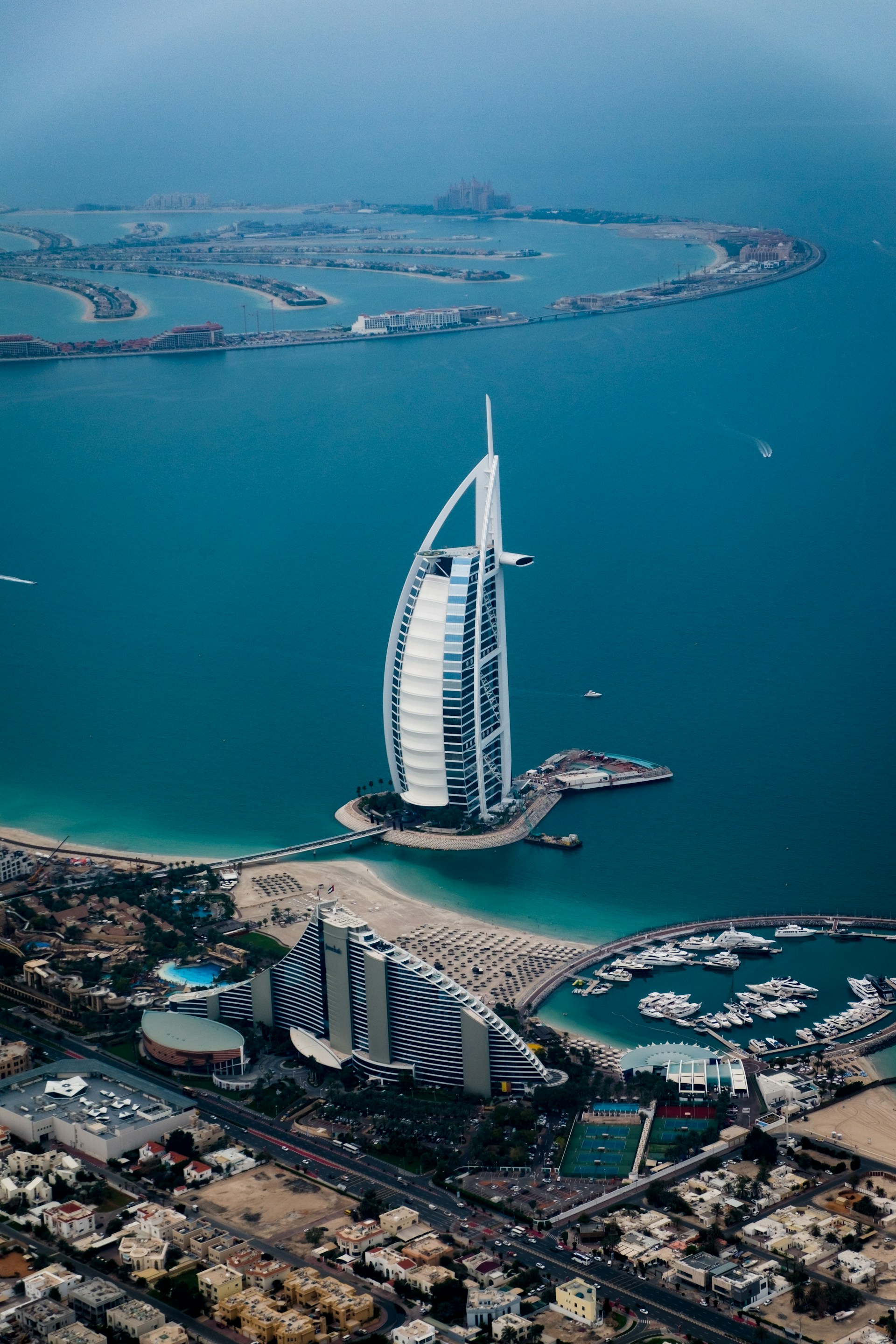
Palm Jumeirah at 25 — how the crescent is evolving in 2026 — updated view
When Nakheel's master-planned archipelago opened its trunk road in 2007, Palm Jumeirah became shorthand for ambition: signature villas, private beaches, and the
Dubai vs Abu Dhabi property — a side-by-side 2026 comparison
Dubai and Abu Dhabi sit less than 140 kilometres apart, yet their property markets could not be more distinct. Dubai has long been the region's commercial and l
Corporate relocation to Dubai — housing budgets, communities and lease structures
Dubai's corporate relocation landscape has matured considerably over the past decade, transforming from ad-hoc packages into structured frameworks that balance