International City Returns
International City — the sprawling, culturally themed development off the Dubai–Hatta Road — has long occupied an unusual niche in the emirate's property consci
For a decade, International City has been written off as Dubai's bargain-basement option — yet 2025 and 2026 have shown that rental yields here can quietly outpace many freehold favourites.
Introduction
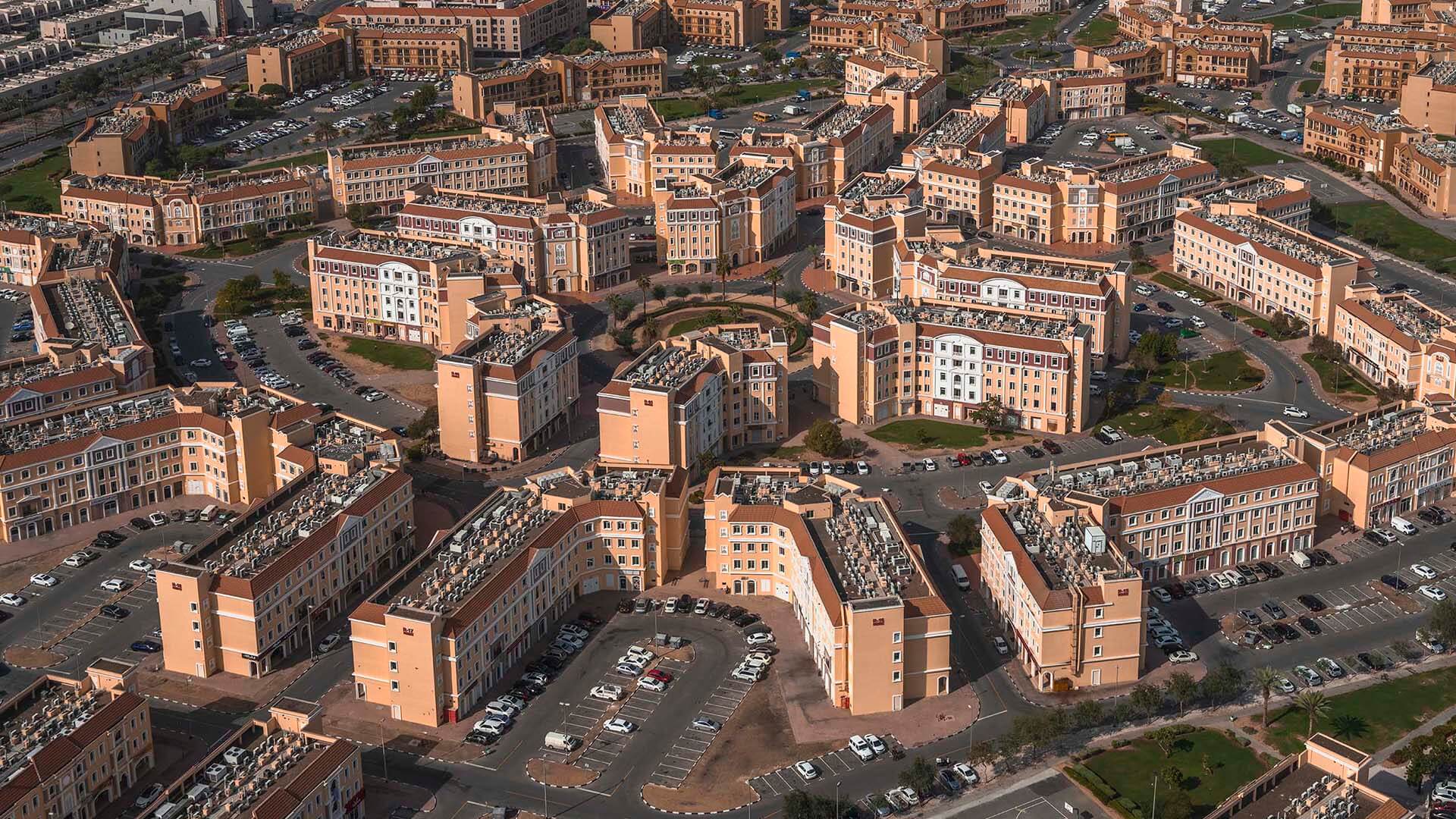
International City — the sprawling, culturally themed development off the Dubai–Hatta Road — has long occupied an unusual niche in the emirate's property consciousness. Built by Nakheel in phases between 2002 and 2015, it houses over 45,000 residents across ten clusters named for countries: England, China, Persia, Greece, Morocco, Russia, Spain, France, Italy and the Emirates. For years it was dismissed as affordable-only housing, a transit hub for mid-income expatriates rotating in and out of the UAE. But rental dynamics in 2025 shifted the calculus. With rents climbing sharply in established areas — Jumeirah Village Circle, Discovery Gardens, even parts of Deira — investors have rediscovered International City's consistent cash flow, predictable demand, and surprisingly resilient tenant pool. This post examines the current state of returns in the district, who is buying, what yields look like today, and whether the momentum is sustainable.
The yield equation: why International City still pencils
Gross rental yields in Dubai's residential market have compressed in many sought-after communities as capital values rose faster than rents through 2023 and 2024. By early 2025, yields in Dubai Marina and Downtown often sat between 4.5 and 5.5 per cent, while parts of Business Bay hovered around six per cent. International City, by contrast, continues to deliver gross yields in the 7 to 9 per cent range for studio and one-bedroom units, depending on cluster and condition.
The arithmetic is straightforward. A well-maintained one-bedroom apartment in International City can be acquired for approximately AED 300,000 to 380,000; annual rents for the same unit typically range from AED 24,000 to 32,000. That translates to yields that remain materially above the Dubai median. Service charges here are also notably lower than in tower-heavy districts — commonly AED 6 to 9 per square foot per annum — which preserves net returns.
The tenant profile is stable: mid-income families, single professionals, and occasionally short-term corporate rotations. Vacancy risk is mitigated by proximity to Dragon Mart, the Dubai Outlet Mall, and direct access to Emirates Road and the E44. Turnover exists, but the sheer volume of units and constant demand from cost-conscious renters means landlords rarely face extended voids.

Capital appreciation: modest but present
International City is not — and has never been — a capital-growth play. But dismissing appreciation entirely is no longer accurate. Data from the Dubai Land Department and third-party indices show that average transaction prices in International City rose roughly 8 to 12 per cent between Q1 2023 and Q1 2025, a period when many established districts saw 15 to 25 per cent gains.
That relative underperformance, however, is precisely what attracts a certain investor. Entry prices remain accessible, meaning cash buyers or those using modest leverage can construct portfolios of multiple units with manageable risk. The upside is capped, but so is downside volatility. International City did not experience the dramatic corrections seen in more speculative areas during the 2014–2017 cycle.
Anecdotally, buyers in 2025 and 2026 have included Pakistani, Indian, and Filipino nationals seeking UAE residency via the two-year investor visa (which requires property worth at least AED 750,000, often met by purchasing two units). The community also sees interest from European and South African retirees assembling yield-focused portfolios. No developer has announced major new supply here; Nakheel's focus has shifted to master-planned communities like Nad Al Sheba and Deira Islands, which further limits future dilution.
Operating realities: maintenance, management, and tenant churn
Owning in International City demands pragmatism. These are mid-2000s buildings; lifts occasionally fail, façades require upkeep, and communal areas lack the polish of newer developments. Landlords who neglect maintenance find tenants reluctant to renew, particularly as competing stock in nearby Warsan Village and Liwan improves.
Professional property management is not optional. Self-managing from abroad — a temptation given the modest unit prices — often leads to protracted void periods, delayed maintenance, and tenant disputes. Reputable agencies charge between 5 and 7 per cent of annual rent, a cost that should be factored into net yield calculations from the outset.
Tenant churn averages one to two years, shorter than in family-oriented communities like Arabian Ranches or The Springs. This necessitates frequent minor refurbishments: repainting, appliance replacement, and occasional deep cleaning. Budgeting AED 3,000 to 5,000 annually for turnover costs is prudent. That said, the RERA-mandated tenancy framework — including the rental index and dispute resolution mechanisms — functions well here, and most lease renewals proceed without complication.
Cluster choice matters. England, Persia, and Greece clusters are generally perceived as better-maintained; some buildings in Russia and Spain have older fit-outs and slower lifts. Due diligence should include a site visit and a review of owners' association meeting minutes, if accessible.
The 2026 outlook: resilience in a moderating market
Dubai's broader residential market is entering a phase of moderation. Supply pipelines are full, interest rates remain elevated globally, and the post-pandemic demand surge has normalised. In this environment, high-yield, low-entry-price assets regain relevance.
International City is unlikely to see dramatic rent inflation — annual increases of three to five per cent are more realistic than double-digit jumps — but neither is it vulnerable to sharp corrections. The tenant base is needs-driven, not aspirational. Demand correlates with Dubai's overall expatriate employment, which remains robust across logistics, retail, and mid-tier services.
Regulatory tailwinds also matter. RERA's continued enforcement of landlord-tenant protections, transparent rent indices, and streamlined eviction processes for non-payment all reduce friction. The emirate's broader infrastructure investment — including the expansion of the Dubai Metro Blue Line and ongoing upgrades to Emirates Road — incrementally enhances International City's connectivity.
For investors seeking a blend of yield, liquidity (units here change hands regularly), and minimal volatility, International City in 2026 offers a compelling, if unglamorous, proposition. It will never feature in glossy developer brochures, but for those focused on cash flow and portfolio diversification, it remains one of Dubai's quiet performers.
Practical takeaways
- Target clusters carefully: England, Persia, and Greece generally offer better build quality and tenant appeal; inspect before committing.
- Model conservatively: Assume gross yields of 7–8 per cent, deduct 5–7 per cent management fees, AED 6–9/sqft service charges, and AED 3,000–5,000 annual turnover costs.
- Engage professional management: Self-management from overseas is a false economy; a good agent protects both yield and asset condition.
- Verify title and NOC status: Ensure the seller has a clear title deed and that any outstanding service charges or fines are settled at completion.
- Consider portfolio assembly: Two or three units offer diversification, visa eligibility, and the ability to stagger lease renewals, smoothing cash flow.
Frequently asked questions
What is the typical rental yield in International City in 2026?
Gross rental yields for studio and one-bedroom units generally range from 7 to 9 per cent, depending on cluster, unit condition, and furnishing. This remains above the Dubai median, though net yields after management fees, service charges, and maintenance typically settle around 5 to 6.5 per cent for well-run properties.
Is International City a good area for long-term capital appreciation?
Capital growth here is modest — historically 8 to 12 per cent over two-year periods — and lags behind prime districts. It is not a speculative play. However, the low entry price and high yield make it suitable for income-focused investors willing to accept limited price upside in exchange for stable cash flow and low volatility.
Who are the typical tenants in International City?
The tenant base is predominantly mid-income expatriates: South Asian families, single professionals from the Philippines, Pakistan, and India, and occasional short-term corporate placements. Turnover averages one to two years. Demand is driven by affordability, proximity to Dragon Mart, and access to major highways, rather than lifestyle amenity.
Speak to Point Penta
International City may not dominate headlines, but for investors who value cash flow over cachet, it remains one of Dubai's most dependable yield stories. Whether you are assembling a multi-unit portfolio, seeking residency through accessible property investment, or simply looking for transparent, unglamorous returns, our team can help you navigate clusters, negotiate terms, and structure ownership efficiently. Point Penta operates from 902, Ithra Tower, Al Garhoud, Dubai — reach us at info@pointpenta.com or +971 55 739 6664 to discuss how International City might fit your investment thesis.
Point Penta’s research desk publishes editorial market analysis every week. If you’re looking at property in Dubai, an advisor will share the full sales pack — inventory, comparables and the current pricing band — within one business day.
More from the desk
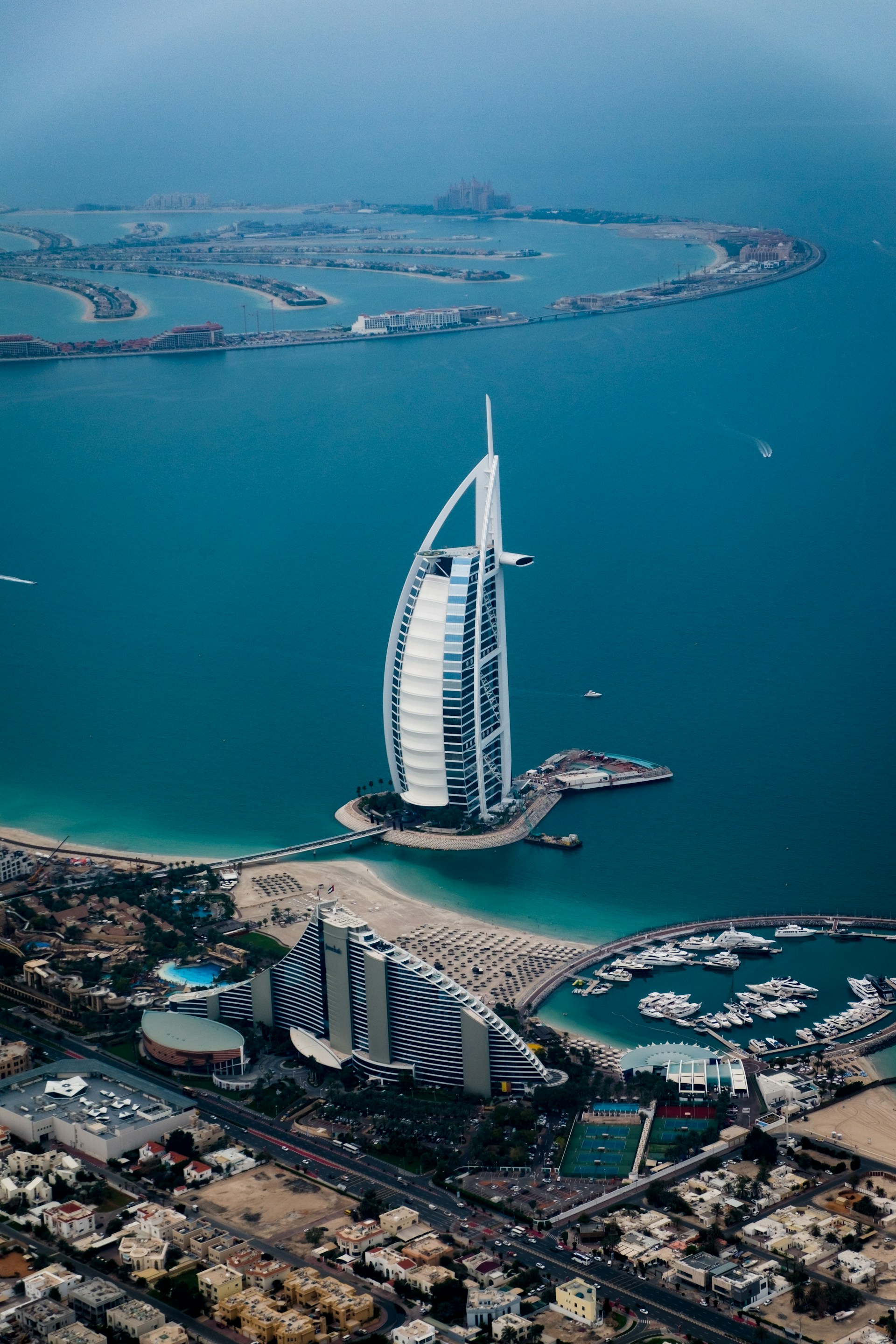
Palm Jumeirah at 25 — how the crescent is evolving in 2026 — updated view
When Nakheel's master-planned archipelago opened its trunk road in 2007, Palm Jumeirah became shorthand for ambition: signature villas, private beaches, and the
Dubai vs Abu Dhabi property — a side-by-side 2026 comparison
Dubai and Abu Dhabi sit less than 140 kilometres apart, yet their property markets could not be more distinct. Dubai has long been the region's commercial and l
Corporate relocation to Dubai — housing budgets, communities and lease structures
Dubai's corporate relocation landscape has matured considerably over the past decade, transforming from ad-hoc packages into structured frameworks that balance