
International City Returns
International City, developed by Nakheel and completed in phases between 2008 and 2015, sits along the eastern edge of Dubai's urban fabric—bounded by Dragon Ma
In a market that rewards both patience and precision, International City has quietly emerged as one of Dubai's most instructive case studies in yield, affordability, and community resilience.
Introduction
International City, developed by Nakheel and completed in phases between 2008 and 2015, sits along the eastern edge of Dubai's urban fabric—bounded by Dragon Mart, Al Warsan, and the Airport Road corridor. Built around a unique cluster-based master plan that divides the community into ten 'country' precincts—England, France, China, Persia, Spain, Greece, Italy, Emirates, Morocco, and Russia—the district was conceived as an affordable alternative to Dubai's more established freehold zones. In 2025, it houses approximately 50,000 residents, predominantly working professionals, service staff, and small families seeking accessible entry points into the city's rental and ownership landscape. For investors evaluating sub-AED-300,000 studio and one-bedroom stock, International City continues to offer a rare combination of affordability, occupancy stability, and quantifiable cash flow that few other micro-markets can match at scale.
Rental yield performance and investor appeal
International City's defining characteristic is yield density. Studio apartments trading in the AED 180,000–250,000 range can command annualised gross returns between 8 and 11 per cent, depending on cluster, furnishing standard, and condition—well above the emirate-wide average of circa 6 per cent for comparable asset classes. One-bedroom units priced between AED 280,000 and AED 380,000 typically deliver yields in the 7.5–9 per cent band, making the district particularly attractive to individual investors seeking monthly income rather than capital appreciation alone.
These returns are underpinned by three structural factors. First, affordability: studio rents range from AED 16,000 to AED 22,000 per annum; one-bedroom units sit between AED 24,000 and AED 32,000. Second, tenant retention: occupancy rates in well-maintained clusters hover around 92–95 per cent, buoyed by proximity to Dragon Mart, low churn among blue-collar and service-sector tenants, and proximity to the Expo City metro extension. Third, low service charges—often AED 4–7 per square foot—keep net operating costs manageable, enabling competitive pricing without eroding margin. While the district does not attract family upgraders or white-collar professionals in large numbers, it consistently absorbs demand from expatriate workers employed in logistics, retail, hospitality, and light industry sectors.

Transaction velocity and liquidity considerations
One frequently misunderstood aspect of International City is liquidity. The community sees high transaction volume—often ranking among the top ten Dubai communities by number of deals registered with the Dubai Land Department—but this velocity is driven almost entirely by investor-to-investor churn rather than owner-occupier demand. The average holding period for studios and one-bedrooms is eighteen to thirty months, reflecting a market segment dominated by short-cycle yield buyers seeking quick payback rather than long-term wealth accumulation.
This pattern introduces both opportunity and friction. On one hand, price discovery is robust: comparable sales data is abundant, valuations are transparent, and buyers rarely face extended negotiation cycles. On the other, exit timing can be sensitive to micro-market sentiment. In periods of broader inventory expansion—such as 2023–2024, when new handovers in nearby districts like Al Furjan, Arjan, and JVT temporarily drew liquidity away—International City resale stock experienced modest price softness, particularly in less desirable clusters. However, by late 2025, price stabilisation resumed as affordability constraints in Dubai Marina, JLT, and Business Bay redirected first-time buyers and yield-focused allocators back toward proven, cash-generative micro-markets. Sellers with well-maintained, furnished units in England, China, or Persia clusters typically secure offers within four to six weeks; those in Morocco or Russia clusters may experience longer timelines.
Cluster differentiation and asset selection
Not all International City stock performs equally, and cluster selection materially affects both rental income and resale appeal. England Cluster, closest to the main entrance and Dragon Mart access points, commands a 10–15 per cent premium over the community average and benefits from stronger tenant demand and lower vacancy friction. China Cluster—the largest by unit count—offers scale and reasonable accessibility, but can experience oversupply effects during peak tenant movement months (typically June and December). Persia Cluster, known for slightly larger unit configurations and better building maintenance, attracts marginally higher-income tenants and enjoys consistent occupancy.
Conversely, clusters positioned farther from transport nodes or commercial amenities—such as Russia, Morocco, and parts of Greece—can suffer from longer void periods and softer rental pricing, particularly for unfurnished stock. Building-level factors also matter: units in towers with proactive facilities management, timely lift maintenance, and attentive security see materially lower tenant complaints and faster re-letting cycles. Investors evaluating entry should prioritise clusters near Dragon Mart, avoid ground-floor units (often affected by noise and pest issues), and verify service charge payment histories with the Owners' Association before committing capital.
Risks, constraints, and long-term positioning
International City is not without constraints. The district has long carried reputational headwinds—perceived by some as congested, under-serviced, and aesthetically utilitarian—that limit its appeal to mid-tier professional tenants and family occupiers. Infrastructure strain is real: parking shortages, peak-hour traffic congestion, and occasional drainage or waste-management challenges persist in older clusters. The absence of purpose-built retail, limited green space, and reliance on Dragon Mart for everyday needs reduce liveability relative to newer master-planned communities such as Town Square or Damac Hills 2.
From a capital appreciation standpoint, International City offers modest rather than exponential upside. Over the past five years, studio prices have appreciated by approximately 12–18 per cent cumulatively—respectable but unremarkable compared to double-digit annual gains seen in Arabian Ranches, Dubai Hills Estate, or Business Bay during the same period. Buyers seeking portfolio diversification or wealth multiplication may find better risk-adjusted returns elsewhere. That said, for investors prioritising income certainty, low entry cost, and proven tenant demand, the district remains a rational allocation. Its resilience through the 2020–2021 downturn—when occupancy held firm and rental declines were contained to single digits—demonstrated its structural role as a cash-flow anchor within diversified portfolios.
Practical takeaways
- Prioritise England, China, and Persia clusters for stronger rental demand, faster liquidity, and lower void risk.
- Budget AED 8,000–12,000 for furnishing a studio or one-bedroom to achieve optimal rental positioning and yield.
- Verify building-level service charge compliance and Owners' Association accounts before purchase to avoid hidden arrears or special levies.
- Target gross yields above 8.5 per cent to ensure net returns remain attractive after service charges, maintenance, and vacancy provisions.
- Plan for an 18–30 month hold horizon if pursuing resale; longer-term capital appreciation is limited, so time exit strategies around income payback milestones.
Frequently asked questions
What gross rental yield can I realistically expect in International City in 2026?
For well-maintained, furnished studios in desirable clusters, gross yields typically range between 8.5 and 11 per cent. One-bedroom units deliver 7.5–9 per cent. Net yields—after service charges, maintenance, and occasional void periods—generally fall 1.5–2 percentage points lower. These figures assume competitive rental pricing and average occupancy rates above 90 per cent. Unfurnished or poorly located units will underperform this range.
Is International City suitable for family living or only for investors?
International City is overwhelmingly investor-dominated, with fewer than 15 per cent of units estimated to be owner-occupied. The community's design, tenant profile, and infrastructure prioritise affordability and density over liveability. Families seeking quality schooling catchments, recreational amenities, or community cohesion will find better options in Arabian Ranches, Jumeirah Village Circle, or Town Square. International City remains best suited to single professionals, couples, and small households prioritising cost over environment.
How does International City compare to other affordable yield markets like Discovery Gardens or Dubai Sports City?
International City offers marginally higher gross yields than Discovery Gardens (typically 7–9 per cent) but similar liquidity and tenant profiles. Dubai Sports City delivers comparable yields but benefits from better master-planning and amenity provision. JVC, while slightly pricier, attracts a higher-quality tenant base and stronger family demand. International City's primary advantage is entry price: studios can be acquired for 20–30 per cent less than equivalent JVC or Sports City stock, making it the most accessible yield play for small-scale investors with limited capital.
Speak to Point Penta
At Point Penta, we specialise in helping investors and buyers navigate Dubai's full spectrum of opportunities—from high-yield, cash-generative micro-markets like International City to aspirational family communities and luxury waterfront districts. Whether you are evaluating your first studio purchase or rebalancing a portfolio of twenty units, our research-led approach ensures you make decisions grounded in transparent data, realistic expectations, and long-term clarity. Our team works from 902, Ithra Tower, Al Garhoud, Dubai, and we welcome inquiries by email at info@pointpenta.com or by phone at +971 55 739 6664. Let us help you build a portfolio that works.
Point Penta’s research desk publishes editorial market analysis every week. If you’re looking at property in Dubai, an advisor will share the full sales pack — inventory, comparables and the current pricing band — within one business day.
More from the desk
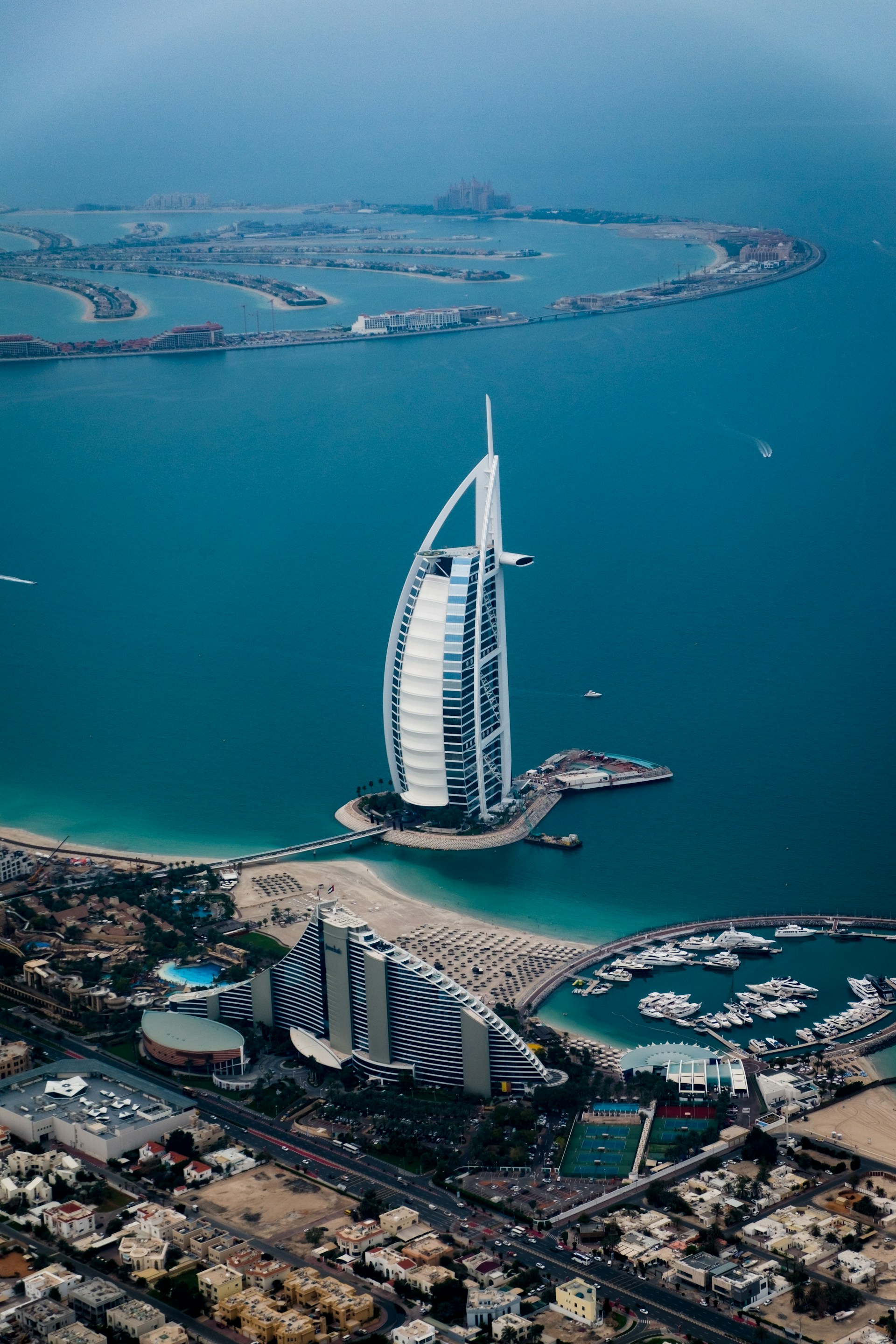
Palm Jumeirah at 25 — how the crescent is evolving in 2026 — updated view
When Nakheel's master-planned archipelago opened its trunk road in 2007, Palm Jumeirah became shorthand for ambition: signature villas, private beaches, and the
Dubai vs Abu Dhabi property — a side-by-side 2026 comparison
Dubai and Abu Dhabi sit less than 140 kilometres apart, yet their property markets could not be more distinct. Dubai has long been the region's commercial and l
Corporate relocation to Dubai — housing budgets, communities and lease structures
Dubai's corporate relocation landscape has matured considerably over the past decade, transforming from ad-hoc packages into structured frameworks that balance