Golden Visa via property — the 2026 rules explained
The UAE Golden Visa system has evolved from a selective invitation-only privilege into a structured, transparent pathway for long-term residence—and property re
Golden Visa via property — the 2026 rules explained
For many international families, a Dubai apartment is no longer just an address—it's a ten-year residence permit wrapped in title deeds.
Introduction
The UAE Golden Visa system has evolved from a selective invitation-only privilege into a structured, transparent pathway for long-term residence—and property remains one of the most straightforward qualifying routes. Since the programme's expansion, investors purchasing real estate above a certain threshold can sponsor themselves and immediate family members for renewable ten-year visas, without the need for continuous employment or corporate sponsorship. In 2026, the framework is clearer than ever: an AED 2 million minimum investment, express eligibility for off-plan purchases under certain conditions, and the ability to pool ownership among spouses. Whether you are evaluating a villa in Arabian Ranches, an apartment in Dubai Marina, or a penthouse in one of Emaar's Downtown towers, understanding the precise rules—and how they differ from employment- or retirement-based Golden Visas—will help you structure the transaction correctly from the outset.
The AED 2 million threshold and what qualifies
To qualify for a property-backed Golden Visa, you must acquire real estate valued at a minimum of AED 2 million. This figure is non-negotiable and applies to the purchase price recorded in the sales contract registered with the Dubai Land Department. Mortgaged properties are permitted: only your equity contribution—the deposit and subsequent instalments you personally pay—needs to reach AED 2 million. In practical terms, if you secure a 75 per cent loan-to-value mortgage on a villa priced at AED 4 million, your AED 1 million cash equity does not qualify; you would need to contribute at least AED 2 million in cash and financing combined, or purchase outright.
The property must be retained throughout the visa validity period. Selling before the ten-year term ends does not automatically revoke your Golden Visa, but renewal will require proof of continued ownership or reinvestment in another qualifying asset. Both residential and commercial property types are eligible—apartments, villas, townhouses, retail units, and offices all count—provided the transaction is recorded through the DLD or the relevant free-zone land registry and the AED 2 million criterion is met. Land plots without a built structure do not typically qualify unless the total development value, including construction costs evidenced by contract, satisfies the threshold.
Off-plan purchases and instalment-based eligibility
One of the programme's most attractive features is the acceptance of off-plan property. You do not need to wait for project handover to apply. Once you have paid a cumulative AED 2 million in developer instalments—even if the unit is still under construction—you may submit your Golden Visa application, provided the developer is registered with RERA and the sales-and-purchase agreement is attested by the DLD or equivalent authority in a Dubai free zone.
Most major developers—Emaar Properties, Dubai Properties, Nakheel, Meraas, Sobha Realty—offer payment plans that allow buyers to reach the AED 2 million mark within twelve to twenty-four months. Importantly, the instalment must be your own capital; if a spouse or parent transfers funds on your behalf, ensure the bank remittance trail is documented, as immigration authorities may request proof of source. Some applicants structure the purchase as a joint acquisition with a spouse to accelerate the AED 2 million contribution, which leads us to the next consideration: co-ownership rules.
Off-plan buyers should also confirm that the developer provides an interim DLD-registered Oqood certificate or equivalent before applying. This certificate serves as proof of purchase and is a prerequisite document in the visa dossier.
Joint ownership with a spouse and dependent sponsorship
Spouses may jointly purchase a property to satisfy the AED 2 million minimum, and both can qualify for individual Golden Visas if each has contributed at least AED 1 million verifiable through payment receipts and their names appear as co-owners on the title deed. The split does not need to be exactly 50–50; flexible arrangements are acceptable as long as the aggregate reaches or exceeds AED 2 million and both parties are listed in the DLD registry.
Once approved, the primary Golden Visa holder is entitled to sponsor immediate dependents—spouse, children of any age, and parents—under the same long-term residence framework. Previously, dependent visas were limited to three-year validity; under the updated rules, family members sponsored by a Golden Visa holder benefit from longer-term permits aligned with the principal's ten-year visa, subject to periodic renewal linked to the sponsor's status.
This feature distinguishes the property route from an employment-based visa, where sponsorship is often restricted by the employer's willingness and the employee's salary bracket. For families with adult children studying or working abroad who wish to maintain Emirates ID and tax-residency ties, the Golden Vis property pathway offers continuity and flexibility without relying on corporate HR departments or Ministry of Labour quota approvals.
Renewal, sale, and the question of liquidity
Golden Visas issued through property investment are renewable every ten years, contingent on continued compliance. The Federal Authority for Identity, Citizenship, Customs & Security (ICP) requires proof that you still own the qualifying asset—or have reinvested proceeds into another property or business meeting the eligibility criteria—at renewal time.
If you sell the property during the ten-year period, your visa remains valid until its expiry date; however, renewal will hinge on demonstrating alternative qualifying investments. Some holders choose to purchase a second property—perhaps a smaller studio or retail unit—before disposing of the original asset, thereby maintaining uninterrupted eligibility. Others transition to a business-investor Golden Visa if they have since incorporated a mainland or free-zone company with sufficient capital.
From a liquidity standpoint, Dubai's secondary market has matured significantly. Resale transactions in established communities—Palm Jumeirah, Business Bay, Jumeirah Village Circle—typically complete within sixty to ninety days, and DLD transfer procedures are efficient. This liquidity cushion affords Golden Visa holders reasonable flexibility: you are not locked into a single property indefinitely, but strategic timing and reinvestment planning are essential to avoid a lapse in residency status.
Golden Visa by property versus employment and retirement routes
The property-investment path is one of three common Golden Visa categories available to individuals in 2026. Employment-based Golden Visas are granted to professionals in specialised fields—doctors, engineers, scientists, executives—and to entrepreneurs holding valid commercial licences with substantial capital. Retirement Golden Visas require applicants to be over fifty-five, demonstrate savings of at least AED 1 million or ongoing income of AED 20,000 per month, and own property worth a minimum of AED 2 million or present equivalent financial securities.
For many buyers, the property route offers the clearest documentation trail: a sales contract, payment receipts, and a title deed provide tangible, verifiable proof. Employment visas require employer nomination letters and sometimes ministerial endorsements; retirement visas demand bank statements spanning six months and notarised pension documentation. By contrast, real-estate ownership is binary—you either hold title or you do not—which simplifies both the initial application and subsequent renewals.
That said, property investors should be mindful of opportunity cost. Tying AED 2 million in bricks and mortar yields residency and potential capital appreciation, but foregoes the liquidity and diversification that cash or securities afford. Balancing portfolio allocation—perhaps purchasing an AED 2.5 million apartment while retaining offshore investments—is a prudent strategy, particularly for families who value the option to relocate or redeploy capital in future years.
Practical takeaways
-
Verify the AED 2 million minimum early.** Request a detailed payment schedule from the developer or agent, and ensure your contribution—equity plus mortgage drawdown—meets or exceeds the threshold before initiating the visa application.
-
Retain meticulous financial records.** Bank transfer confirmations, developer receipts, mortgage agreements, and DLD registration documents will all be required; organise them digitally in a single folder.
-
Coordinate title-deed registration promptly.** Even with off-plan purchases, obtain an Oqood or interim registration certificate as soon as you reach AED 2 million in payments; this document is critical for the ICP submission.
-
Plan for renewal from day one.** Set a calendar reminder for year nine to review your property portfolio and consider whether you will hold, sell and reinvest, or diversify into a business-backed visa category.
-
Consult both a registered conveyancer and an immigration adviser.** Property transactions and visa applications intersect at several regulatory touchpoints—RERA, DLD, ICP—and coordinated professional guidance helps avoid costly delays or rejections.
Frequently asked questions
Can I use a mortgage to meet the AED 2 million requirement?
Yes, mortgaged property qualifies. The AED 2 million threshold refers to the registered purchase price, not your personal cash outlay. However, you must maintain ownership throughout the visa period, and the lender's consent may be required if you plan to sell before the mortgage is repaid.
What happens if I sell my property before the Golden Visa expires?
Your visa remains valid until its ten-year expiry date. Renewal, however, will require proof of a new qualifying investment—either another property worth AED 2 million or more, or an alternative route such as a business investment or qualifying savings under the retirement scheme.
Are my adult children eligible for dependent visas under my property-backed Golden Visa?
Yes. Immediate family members—including children of any age—can be sponsored under your Golden Visa. Previously, dependency was capped, but current regulations allow indefinite sponsorship as long as your own visa remains active and compliant.
Speak to Point Penta
Whether you are weighing a first purchase in Business Bay, consolidating fractional ownerships into a single qualifying asset, or planning a family relocation timed to school admissions, a clear understanding of the Golden Visa's mechanics should inform every stage of your property search. Point Penta's research and advisory desk combines granular market knowledge with step-by-step residency guidance, helping international buyers structure transactions that serve both lifestyle and legal requirements. Our office is at 902, Ithra Tower, Al Garhoud, Dubai—an easy conversation away from the airport and the communities we know best. Reach out at info@pointpenta.com or call +971 55 739 6664 to arrange a confidential consultation.
Point Penta’s research desk publishes editorial market analysis every week. If you’re looking at property in Dubai, an advisor will share the full sales pack — inventory, comparables and the current pricing band — within one business day.
More from the desk
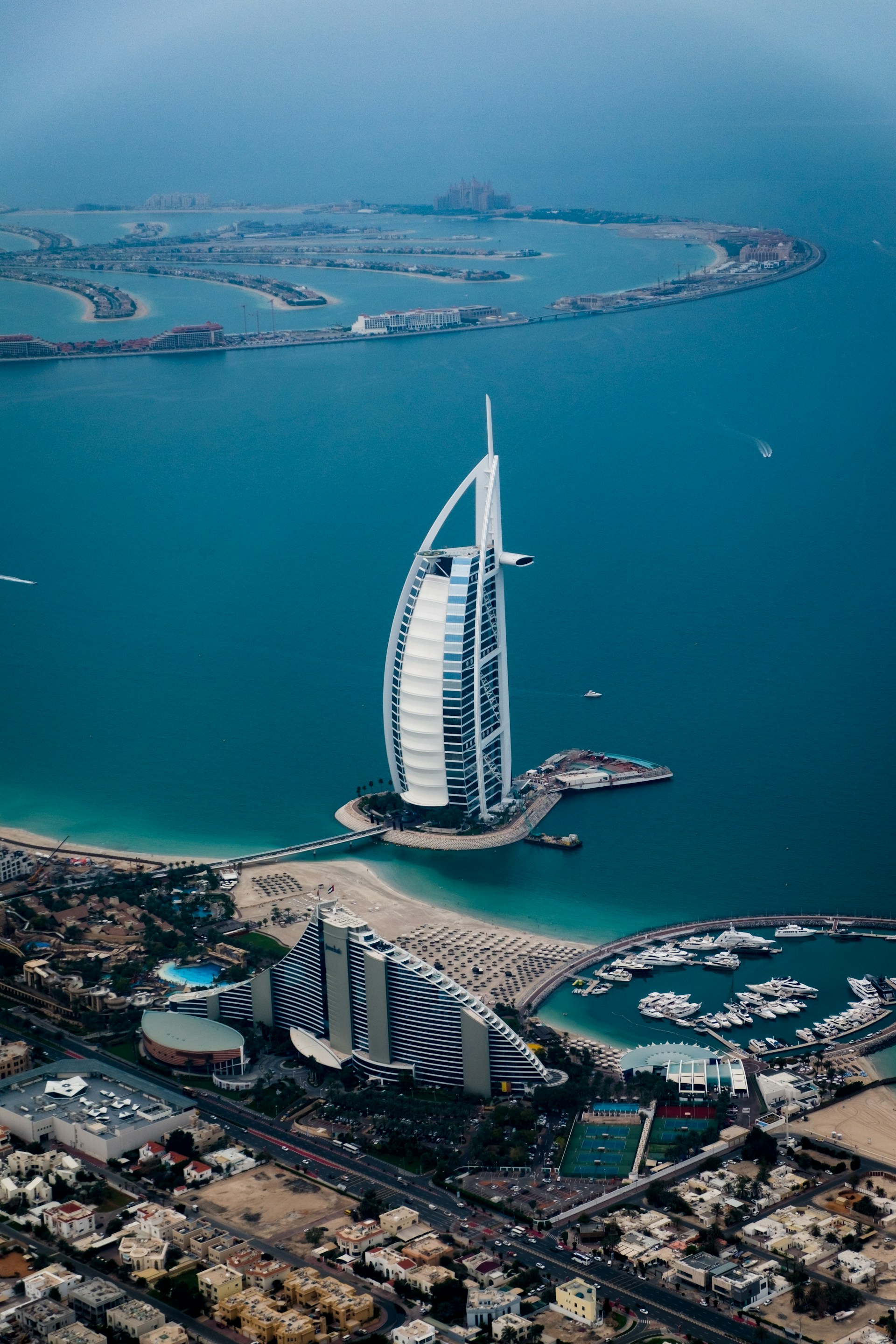
Palm Jumeirah at 25 — how the crescent is evolving in 2026 — updated view
When Nakheel's master-planned archipelago opened its trunk road in 2007, Palm Jumeirah became shorthand for ambition: signature villas, private beaches, and the
Dubai vs Abu Dhabi property — a side-by-side 2026 comparison
Dubai and Abu Dhabi sit less than 140 kilometres apart, yet their property markets could not be more distinct. Dubai has long been the region's commercial and l
Corporate relocation to Dubai — housing budgets, communities and lease structures
Dubai's corporate relocation landscape has matured considerably over the past decade, transforming from ad-hoc packages into structured frameworks that balance