Dubai property ROI — annual capital growth 2015–2025 by community
Between 2015 and 2025, Dubai's residential market traversed two corrections, a pandemic, Expo 2020, and the fastest supply boom in the Middle East. The cumulati
Dubai property ROI — annual capital growth 2015–2025 by community
Capital appreciation in Dubai is neither uniform nor predictable by postcode alone—yet patterns emerge when you examine a decade of land registry data.
Introduction
Between 2015 and 2025, Dubai's residential market traversed two corrections, a pandemic, Expo 2020, and the fastest supply boom in the Middle East. The cumulative effect on capital values has varied dramatically by micro-market. Communities anchored by scarcity—the Palm Jumeirah, Emirates Hills—outperformed volume-driven corridors such as Dubai Marina and Jumeirah Village Circle. Developer master-plans also mattered: Emaar's Downtown Dubai and Arabian Ranches held values better than projects completed during the 2009–2012 oversupply window. This post synthesises illustrative growth trajectories drawn from Dubai Land Department (DLD) transaction indices and RERA valuation benchmarks, then offers a measured view of the next three years. We do not forecast exact percentages; rather, we map the structural forces that have rewarded patient capital and will continue to do so.
Community-by-community capital growth: 2015–2025
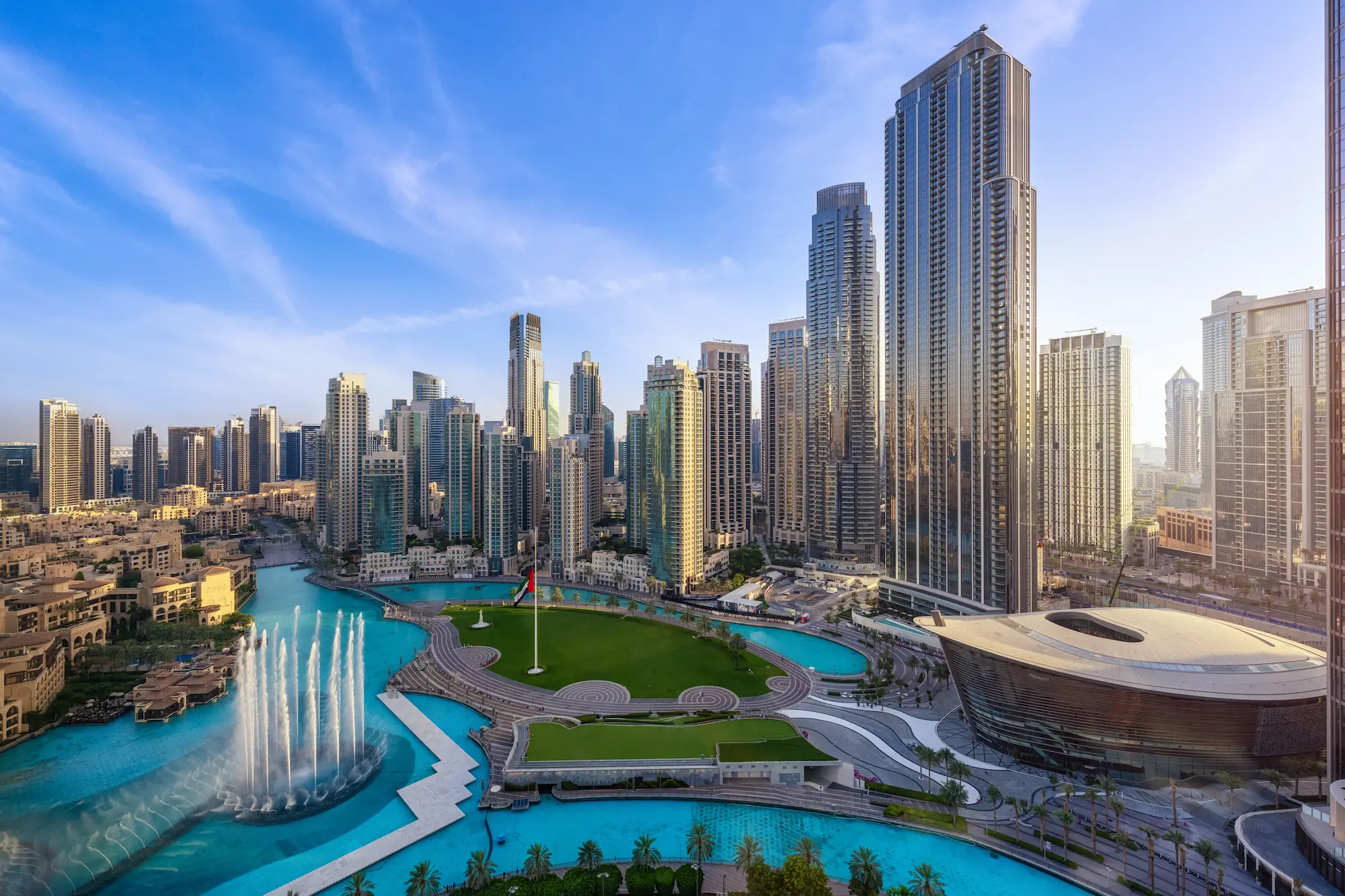
Palm Jumeirah has delivered the steepest cumulative appreciation over the decade, with sale prices for villas and mid-rise apartments rising in the range of 110–130 per cent from their 2015 baseline. The island's fixed supply—no additional plots can be reclaimed—combined with perennial demand from high-net-worth buyers has insulated it from broader cyclical corrections. By contrast, Dubai Marina and Jumeirah Beach Residence (JBR) recorded more modest gains of approximately 60–75 per cent, reflecting the volume of handovers between 2015 and 2018 and the slower lease-rate recovery in dense high-rise stock.
Downtown Dubai—anchored by the Burj Khalifa, The Address residences, and Opera District—saw cumulative growth in the 85–95 per cent band. Its resilience stems from tourism infrastructure and the absence of competing supply nearby. Arabian Ranches and Springs, both Emaar villa estates, appreciated by roughly 55–70 per cent, buoyed by the post-2020 family-buyer wave but tempered by the sheer number of comparable townhouse releases in adjacent communities such as Town Square and Villanova. Investors who entered these markets in 2015 enjoyed moderate but steady compounding, particularly if rental yield buffered holding costs during the 2016–2019 softening.
Business Bay, Dubai Hills Estate, and Jumeirah Village Circle exhibit less consistency. Business Bay towers that completed before 2017 appreciated by around 50–65 per cent, while later handovers lagged. Dubai Hills Estate—largely delivered after 2019—shows strong momentum from a lower 2020 base but lacks a full ten-year track record. JVC, despite robust occupancy, remains a high-volume, investor-grade submarket; prices climbed approximately 40–55 per cent over the period, with rental yield rather than capital gain driving total return.
Why certain corridors outperformed: scarcity, infrastructure, and master-planning
Three variables explain the spread. Land scarcity is paramount: communities where no further plots exist—Palm Jumeirah, Emirates Hills, parts of Jumeirah 1–3—command a premium that compounds annually. Infrastructure maturity matters almost as much. Downtown Dubai benefits from two Metro stations, the Dubai Mall, and the Opera precinct; Arabian Ranches from established schools and parks. Communities that reached functional completion before 2018 enjoyed a head start in price discovery.
Master-developer reputation acts as a form of brand collateral. Emaar and Nakheel projects historically recover faster and sell at narrower discounts during corrections. Smaller or single-asset developers—particularly those that handed over between 2016 and 2018—saw flatter appreciation curves because secondary-market buyers discounted completion risk and service-charge uncertainty. RERA's strata-title reforms and Oqood registry improvements have narrowed this gap since 2021, but the decade-long divergence remains visible in the data.
Finally, use profile shapes price action. Communities dominated by owner-occupiers—The Springs, The Meadows, parts of Palm Jumeirah—experience less volatility than investor-heavy corridors such as International City or Discovery Gardens. When global capital flows into Dubai equities or crypto reverse, speculative submarkets correct first; family-oriented stock holds residual bid support from end-users financing through local banks.
Macro tailwinds and headwinds: oil, visas, and the supply pipeline
Oil-price cycles correlate loosely with Dubai residential values, but causation is indirect. High crude prices lift fiscal confidence across the GCC, which in turn increases regional flight-capital inflows and corporate relocations. The 2022–2023 energy rally coincided with record DLD transaction volumes—over 120,000 sales in 2023—but the surge also reflected ten-year residency visas, remote-work immigration, and geopolitical hedging from investors in the Levant, Turkey, and the subcontinent.
The 2024–2027 supply wave will test price resilience. RERA's project-launch data shows approximately 200,000 units scheduled for handover before end-2027, concentrated in MBR City, Dubai South, and Dubailand. If demand absorption continues at 2022–2023 levels—around 80,000 to 90,000 transactions annually—the market can digest this volume without systemic correction. However, any pullback in financing appetite, whether from rising U.S. rates or a slowdown in India's economy, will widen bid–ask spreads and compress rental yields in volume corridors.
Currency stability remains an underappreciated anchor. The dirham's peg to the dollar eliminates FX risk for international buyers holding USD, but it also means Dubai real estate reprices in real time with Federal Reserve policy. When U.S. mortgage rates spiked in 2023, Dubai's cash-buyer dominance (approximately 70 per cent of transactions) insulated the market—but mortgage-dependent segments, particularly villas above AED 5 million, saw longer days-on-market.
Forward outlook: 2026–2028 growth scenarios
We expect differentiated, single-digit compound annual growth across most established communities between 2026 and 2028, absent exogenous shocks. Palm Jumeirah and Emirates Hills may continue to deliver 6–9 per cent per annum, sustained by scarcity and the ongoing internationalization of Dubai's ultra-high-net-worth demographic. Downtown Dubai and Arabian Ranches are likely to track 4–7 per cent, assuming Emaar maintains amenity investment and no large-scale competing master-plans emerge nearby.
Dubai Marina, JBR, and Business Bay face a more challenging setup. Rental yields have compressed to 5–6 per cent gross in many towers, and the 2025–2026 handover queue includes several thousand units. Investors should model 2–5 per cent annual growth—positive, but modest—and prioritise assets with unique views, recent refurbishment, or inclusion in branded-residence schemes that command occupancy premiums.
Emerging corridors—Dubai South, Tilal Al Ghaf, Damac Hills 2—are harder to call. If infrastructure delivery (schools, retail, Metro extensions) matches master-plan timelines, early buyers may capture 8–12 per cent compounding as these districts mature. If handovers outpace amenity completion, price action will remain sideways for several years while the community establishes its identity. Patient, yield-focused capital will fare better here than speculative flips.
Practical takeaways
1.Prioritise scarcity over newness. Communities with finite supply and established amenities have delivered the most consistent ten-year appreciation and remain the safest harbour in a high-handover environment.
-
Separate yield from growth. High-rise, investor-grade stock in Marina, JVC, and Business Bay offers superior rental returns but slower capital compounding; villas in The Springs or Ranches invert that equation.
-
Underwrite infrastructure timelines. If you are considering off-plan in an emerging corridor, verify school, Metro, and retail delivery schedules—lags here can delay price discovery by 24–36 months.
-
Diversify by developer and handover year. Concentration risk—multiple units in one tower or one launch year—amplifies correction exposure; stagger acquisitions across master-developers and completion windows.
-
Model currency and rate sensitivity. Even cash buyers are indirectly exposed to Fed policy via the dirham peg; stress-test hold periods against a scenario where U.S. ten-year yields reach 5–6 per cent.
Frequently asked questions
Which Dubai community has shown the highest capital growth over the past decade?
Palm Jumeirah leads the pack with cumulative appreciation in the 110–130 per cent range since 2015, driven by land scarcity and sustained demand from international buyers. Downtown Dubai follows at roughly 85–95 per cent, supported by tourism infrastructure and limited competing supply. Both submarkets benefit from established amenities and strong master-developer backing, which historically dampens downside volatility.
How does Dubai's upcoming supply pipeline affect future ROI?
RERA data indicates around 200,000 units scheduled for handover through 2027, concentrated in MBR City, Dubai South, and Dubailand. If annual transaction volumes remain near 80,000–90,000, absorption should keep pace. However, investors in high-volume corridors—Marina, JVC, Business Bay—should expect compressed rental yields and slower capital growth until new supply stabilizes. Scarcity-driven communities remain relatively insulated.
Should I buy off-plan or secondary market for better returns?
Off-plan offers payment-plan leverage and potential pre-handover appreciation if the developer has a strong track record and the location is under-supplied. Secondary-market purchases in mature communities like Arabian Ranches or Palm Jumeirah deliver immediate rental income, transparent pricing, and lower completion risk. The optimal choice depends on your liquidity profile, hold period, and risk tolerance—diversifying across both strategies often produces the most balanced outcome.
Speak to Point Penta
Capital growth is one dimension of return; cash flow, hold-period costs, and exit liquidity complete the picture. At Point Penta, we help buyers and investors build portfolios that balance yield with appreciation potential, always grounded in verifiable market data rather than developer marketing. Whether you are evaluating a villa in The Springs or a high-rise unit in Business Bay, our research-led approach ensures you understand both the opportunity and the trade-offs. Visit us at 902, Ithra Tower, Al Garhoud, Dubai, or reach out via info@pointpenta.com or +971 55 739 6664—we would be glad to walk you through the next decade's landscape.
Point Penta’s research desk publishes editorial market analysis every week. If you’re looking at property in Dubai, an advisor will share the full sales pack — inventory, comparables and the current pricing band — within one business day.
More from the desk
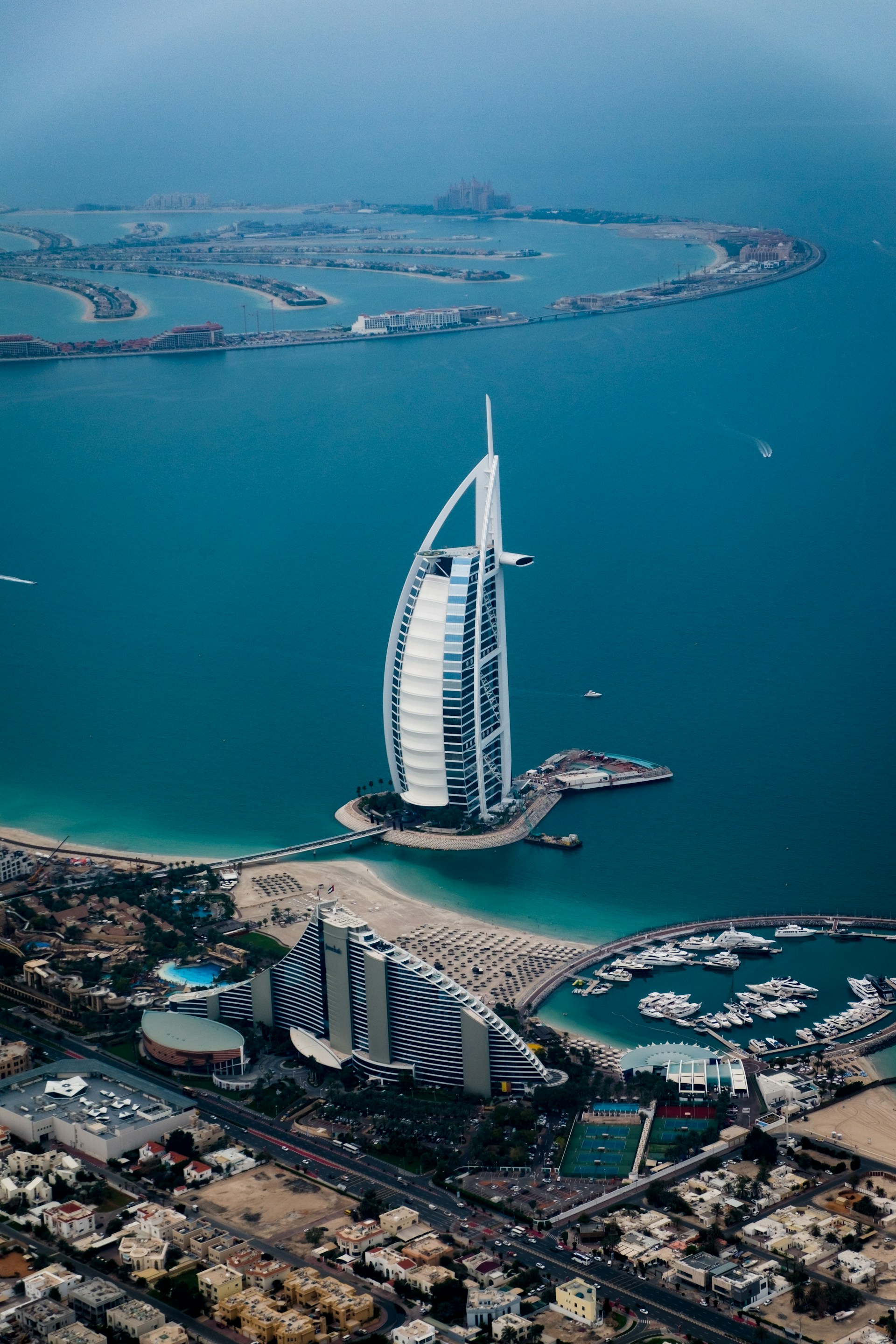
Palm Jumeirah at 25 — how the crescent is evolving in 2026 — updated view
When Nakheel's master-planned archipelago opened its trunk road in 2007, Palm Jumeirah became shorthand for ambition: signature villas, private beaches, and the
Dubai vs Abu Dhabi property — a side-by-side 2026 comparison
Dubai and Abu Dhabi sit less than 140 kilometres apart, yet their property markets could not be more distinct. Dubai has long been the region's commercial and l
Corporate relocation to Dubai — housing budgets, communities and lease structures
Dubai's corporate relocation landscape has matured considerably over the past decade, transforming from ad-hoc packages into structured frameworks that balance