
Dubai Hills Estate — why families keep choosing Emaar's flagship suburb
Dubai Hills Estate sits at the geographic and social heart of new Dubai, straddling Mohammed bin Rashid City and Al Khail Road with over 11 million square feet
Dubai Hills Estate — why families keep choosing Emaar's flagship suburb
When a master-planned community wins planning awards, hosts an 18-hole championship golf course, and still delivers handovers on schedule, it deserves a closer look.
Introduction
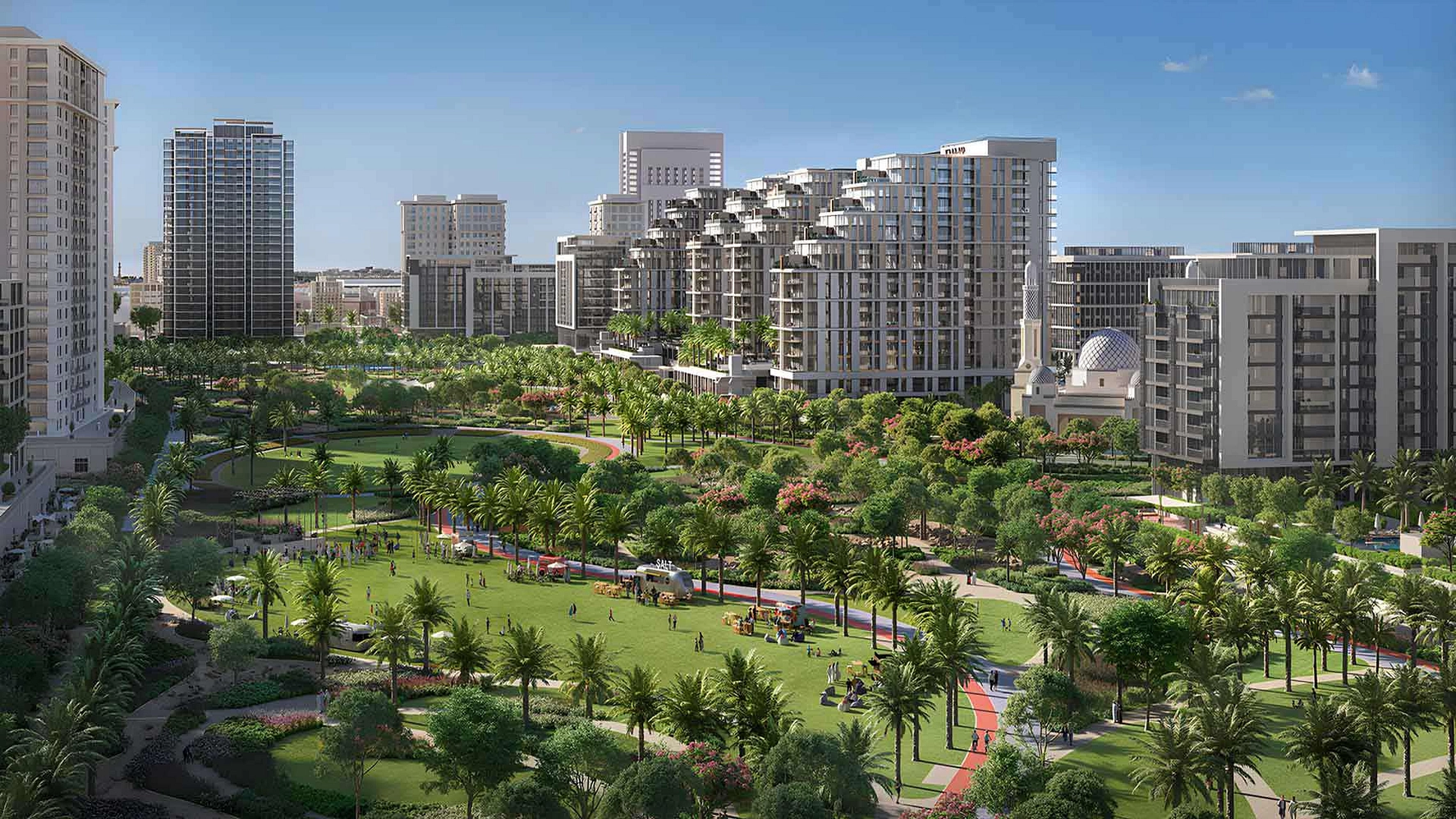
Dubai Hills Estate sits at the geographic and social heart of new Dubai, straddling Mohammed bin Rashid City and Al Khail Road with over 11 million square feet of parkland, retail, education and leisure infrastructure. Since Emaar Properties broke ground in 2014, the suburb has evolved from render to reality, offering families a rare combination: villas with private gardens, mid-rise apartments, a regional shopping destination, GEMS schools within walking distance, and Dubai Hills Golf Club threading through the centre. In a market where communities like Arabian Ranches and Jumeirah Golf Estates set the villa benchmark, Dubai Hills brings density, modernity and connectivity into a single, thoughtfully layered address. For families arriving from London, Singapore or Mumbai, the suburb reads as Dubai's answer to a true, self-contained neighbourhood — not a gated enclave but a polycentric district where schools, clinics, cafés and parks anchor daily life.
Amenities: golf, park, mall and the schools
Dubai Hills Golf Club — designed by European Tour course architects and managed by Troon — opened in phases from 2018. The par-72 championship layout winds through the estate's topography, creating not just a sporting asset but green corridors and lake views for surrounding villa plots. Residents also enjoy Dubai Hills Park, a 1.5‑million-square-foot expanse featuring skate parks, sports courts, playgrounds, barbecue zones and a network of jogging and cycling trails that connect westward to Al Khail Gate and northward toward City Walk. The park became a lockdown lifeline in 2020 and remains a weekend gathering point for stroller-pushing families and after-school football leagues.
Dubai Hills Mall — 2 million square feet of retail, dining and entertainment — anchors the commercial heart. Opened in early 2022, the mall houses an 18‑screen Reel Cinemas, Waitrose, Hamley's, a multi‑brand beauty hall and over 600 shops and restaurants. Crucially, GEMS Founders School, GEMS Metropole School and Fairgreen International School all operate campuses within or immediately adjacent to the estate, making the morning drop‑off a ten-minute commute rather than a cross-city slog. This clustering of education, healthcare (Mediclinic Parkview Hospital sits minutes away) and leisure is the single strongest draw for families who prize walkability and after-school convenience.
Villa versus apartment mix: choosing your format
Dubai Hills offers both formats in unusual variety. Villas — ranging from three‑bedroom townhouses to six‑bedroom standalone plots — cluster in neighbourhood pockets like Maple, Acacia, Sidra and Park Heights. Townhouses typically deliver built-up areas of 1,800–2,500 square feet; detached villas push beyond 4,000–6,000 square feet on larger plots. Build quality is Emaar's corporate standard: plaster, tile, sanitary fittings and MEP systems that meet RERA's post-2016 codes, though buyers should still budget for minor snagging post-handover.
Apartments populate mid-rise clusters such as Park Ridge, Acacia, Collective and Golf Hillside. These range from studios to three-bedroom layouts, typically 500–1,600 square feet, and target both end-users and investors seeking rental yield. Service charges in apartment buildings generally sit between AED 10–18 per square foot annually — a data point worth clarifying at purchase.
The villa–apartment split creates unusual demographic layering. Villas draw expatriate families, often on corporate packages, who need gardens for children and pets and plan to stay three to five years. Apartments attract younger professionals, first-time buyers, and landlords targeting tenants working at Dubai Internet City, Media City or the new Downtown offices. This mix sustains rental demand year-round, softening seasonal volatility seen in mono‑product communities. From a resale perspective, villas in mature phases (Maple 1, Acacia) began appreciating meaningfully from 2021 onward, while newer releases and apartment towers will likely see price discovery extend into 2025–2026 as completions land.
Price growth trajectory: 2020–2026 context
Between 2020 and early 2022, Dubai Hills traded at a discount to Jumeirah Golf Estates and Arabian Ranches. A typical three-bedroom villa might have transacted around AED 2.2–2.8 million; comparable properties in those older communities fetched AED 3–3.5 million. That gap narrowed sharply from mid‑2021 as inventory tightened and buyers prioritised new-build quality over legacy villa stock. By 2023, average villa prices in Dubai Hills had climbed into the AED 3–4 million bracket for ready units, and some larger plots or golf-course-facing properties crossed AED 5 million.
Apartments followed a gentler curve. Off-plan studios launched at roughly AED 500,000–700,000 in 2019–2020; similar units resold for AED 650,000–900,000 by early 2024, depending on floor, view and completion status. Two-bedroom apartments ranged from AED 1.2–1.8 million, with secondary-market premiums of 10–20 per cent over original purchase prices where handover had occurred and community infrastructure was visible.
Looking ahead to 2026, the trajectory depends on three levers: developer pipeline discipline (Emaar continues releasing phases but at measured intervals), mortgage rate stability (EIBOR moves matter for leveraged buyers), and district maturity (as Dubai Hills Mall, schools and park usage deepen, perceived liveability rises). Buyers today are effectively purchasing into year eight of a fifteen‑to‑twenty‑year buildout, meaning infrastructure risk is low but upside may moderate as the community reaches saturation. Conservative forecasts suggest mid‑to‑high single-digit annual appreciation through 2026, barring macro shocks or over-supply.
What to watch for at handover
Handover in any Emaar project follows a documented protocol: final snag inspection, DEWA connection, facilities-management onboarding, and title-deed transfer at the developer's customer-happiness centre. Dubai Hills buyers should nonetheless prepare a short checklist. First, verify that all major systems — air-conditioning, plumbing, electrical panel, intercom — function during the pre-handover inspection. Bring a contractor or surveyor if you lack construction literacy; the AED 500–800 fee often surfaces issues you can formally log before accepting keys.
Second, confirm community-facility access. Golf club membership (if promised), mall parking permits, park entry for residents, and school-admission priority should all be documented in your sale-and-purchase agreement and reflected in the handover pack. Third, clarify service-charge invoicing. The first invoice may arrive within 30–60 days of handover; ensure you understand what it covers (landscaping, security, common-area cleaning) and confirm there are no hidden levies for district cooling or fibre internet, which should be separately metered.
Fourth, register for your DEWA account immediately. Delays can disrupt internet, waste collection and even building access-card activation. Finally, budget for immediate fit-out or furniture if you plan to lease. Landlords who hand over a villa or apartment with quality finishes, fresh paint and minor touches — curtain tracks, kitchen backsplash upgrades, garden turf — achieve 5–10 per cent rental premiums and fill vacancies faster. Even if you intend to occupy, these first-60-days improvements set the baseline for long-term satisfaction.
Practical takeaways
1.Compare formats early: If school proximity is paramount, apartments near GEMS Founders may suit better than a distant villa; if outdoor space matters, prioritise townhouse pockets like Maple or Sidra. 2.Run total‑cost scenarios: Include registration (4 per cent of purchase price), service charges, cooling deposits and furniture estimates to avoid post-handover surprises. 3.Check phase maturity: Earlier phases (Acacia, Park Ridge) offer established landscaping and resale comparables; newer releases carry construction-phase inconvenience but potential price entry advantage. 4.Lock mortgage pre-approval: UAE banks typically cap loan-to-value at 75–80 per cent for residents; securing approval before bidding clarifies budget and strengthens negotiation position. 5.Engage independent inspectors: Emaar's quality is generally robust, but third-party snagging reports provide leverage for remedial work and peace of mind before final acceptance.
Frequently asked questions
Is Dubai Hills Estate fully completed, or are phases still under construction?
Dubai Hills remains an active construction zone. Core infrastructure — Dubai Hills Mall, Golf Club, Park, major roads — is operational, but villa districts and apartment towers continue to launch and hand over in phases through 2025–2026. Buyers should confirm their specific plot or building's expected completion quarter and visit the site to assess surrounding progress.
What are typical rental yields for villas and apartments in Dubai Hills?
Yields vary by property type and tenancy duration. Apartments often deliver 6–8 per cent gross annual yields, especially studios and one-bedrooms leased to young professionals. Villas typically yield 4–6 per cent, reflecting higher absolute prices and family-tenant preferences for longer leases. Actual performance depends on finishing quality, location within the estate and marketing effort.
Can non-residents purchase property in Dubai Hills Estate?
Yes. Dubai Hills lies within a freehold area, allowing foreign nationals to acquire full ownership and register title deeds with the Dubai Land Department. Buyers do not need residency to purchase, though owning a property valued above AED 750,000 opens eligibility for a UAE investor visa, subject to standard application and health-insurance requirements.
Speak to Point Penta
Dubai Hills Estate's ascent from blueprint to established suburb reflects both Emaar's project-delivery discipline and the market's enduring appetite for family-oriented, amenity-rich communities. Whether you are weighing a villa for long-term residence, an apartment for rental income, or simply exploring how Dubai Hills compares to Al Furjan, Town Square or Damac Hills, context and local insight matter. Our team at Point Penta follows handover schedules, price movements and neighbourhood evolution across every major Dubai district. Reach us at 902, Ithra Tower, Al Garhoud, Dubai — or by email at info@pointpenta.com and telephone +971 55 739 6664 — to arrange a site tour, review comparables, or discuss mortgage and due-diligence next steps. Thoughtful decisions start with clear data and patient conversation.
Point Penta’s research desk publishes editorial market analysis every week. If you’re looking at property in Dubai, an advisor will share the full sales pack — inventory, comparables and the current pricing band — within one business day.
More from the desk
How to sell your Dubai apartment in a rising market
Dubai's residential market has demonstrated sustained momentum since mid-2020, with quarterly DLD transaction volumes regularly exceeding historical averages an
Dubai property viewing checklist — 15 things every buyer misses
Dubai's property market moves quickly—handover schedules compress, inventory turns over, and buyers often feel pressed to commit after a single viewing. Yet the
Best time of year to buy in Dubai — a seasonal market analysis
Buying real estate in Dubai is rarely a straightforward exercise in supply and demand. The market breathes with the city's cultural calendar, developer event cy