
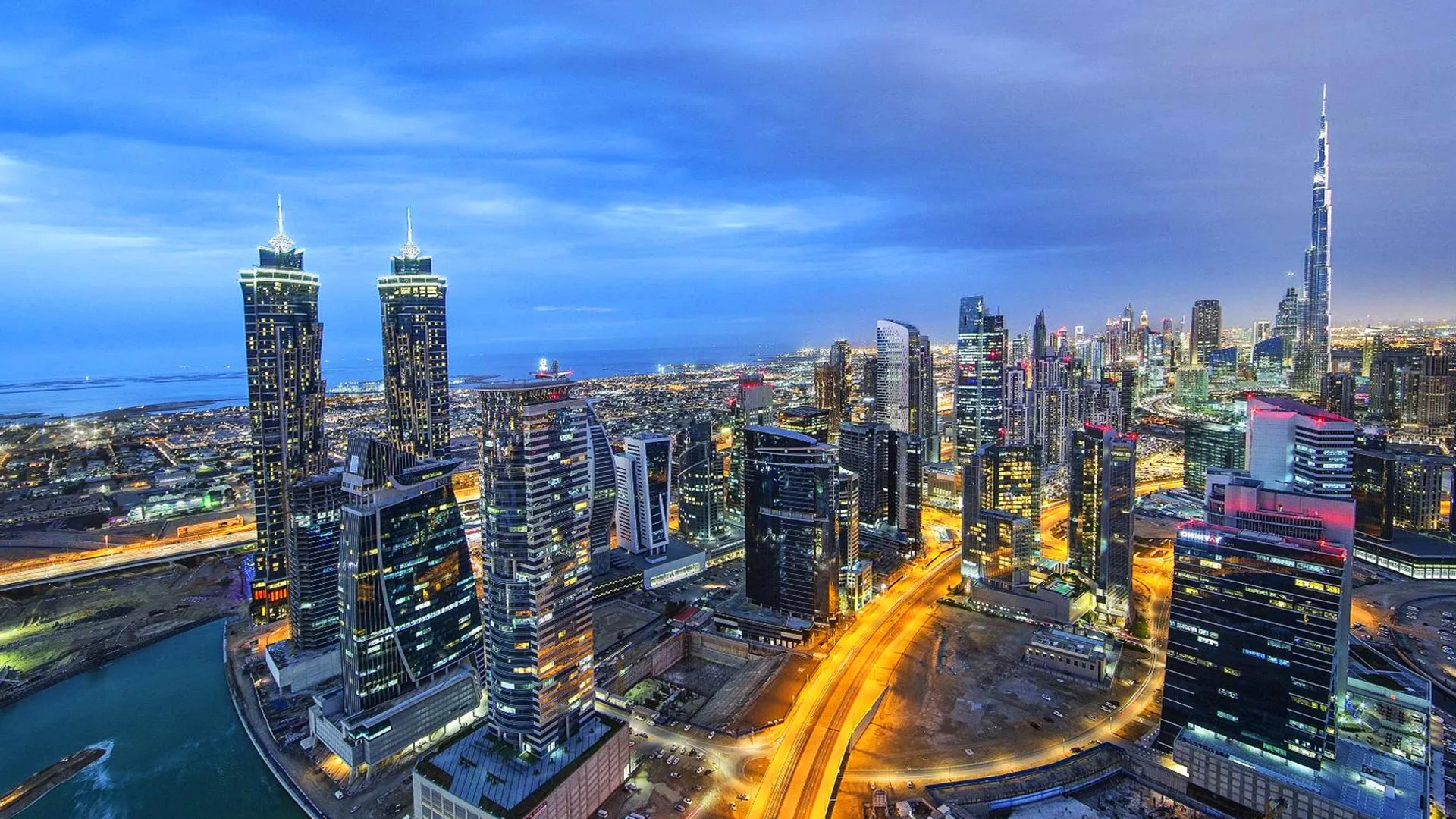
Business Bay in 2026 — where offices meet canal-front residences
Business Bay remains one of Dubai's most intriguing exercises in mixed-use urbanism. Conceived in the early 2000s as the emirate's answer to Singapore's Raffles
Business Bay in 2026 — where offices meet canal-front residences
Few districts so visibly reconcile Dubai's boardroom ambitions with its waterfront lifestyle as Business Bay, where morning commutes and evening canal strolls share the same postcode.
Introduction
Business Bay remains one of Dubai's most intriguing exercises in mixed-use urbanism. Conceived in the early 2000s as the emirate's answer to Singapore's Raffles Place or London's Canary Wharf, the district has evolved into something more nuanced: a vertical neighbourhood where glass-tower offices, serviced apartments, and canal-view residences interlock across 64 million square feet. By 2026 the community's character is markedly hybrid. Emaar, DAMAC, Omniyat and a roster of smaller developers have layered residential product onto the original commercial spine, while the three-kilometre Canal Walk promenade—now lined with cafés, jogging tracks and waterside seating—has become the district's social artery. Bounded by Sheikh Zayed Road to the west and the Downtown skyline to the south, Business Bay offers proximity that few master-plans can match, yet it trades some of the polish of its neighbours for density, energy and yield.
The hybrid blueprint: offices, hotels and homes in one grid
Business Bay's planning brief has always encouraged vertical mixing. Ground-level retail, podium parking, mid-rise office floors and residential towers above form the typical sectional diagram, and the result is a district that hums with activity across multiple day-parts. By 2026 an estimated 35,000 residents live alongside some 50,000 office workers, creating foot traffic that supports an expanding roster of independent coffee bars, co-working lounges and evening restaurants.
For investors this mixed-use DNA translates into occupancy resilience. Tenants who work in the district often prioritise walkable commutes, and families appreciate proximity to Metro (Business Bay station sits on the Red Line), while corporate relocations and serviced-apartment demand from short-term consultants add another revenue layer. Developers such as Deyaar (The Atria), Damac (DAMAC Bay) and Ellington (Belgravia) have each interpreted the brief differently—some favour hotel-style amenities and flexible lease terms, others lean toward larger family layouts—but the underlying premise remains consistent: live-work integration at scale. Rents for one-bedroom canal-view units in well-managed towers typically range between AED 75,000 and AED 95,000 per annum, while offices on mid-to-high floors command AED 90–130 per square foot depending on fit-out and view.
Canal Walk regeneration and the pedestrian renaissance
When Dubai Canal opened in 2016 it bisected Business Bay, transforming what had been an inward-looking cluster of towers into a linear waterfront district. The past two years have seen concerted efforts—by developers, the Roads and Transport Authority and private operators—to activate the three-kilometre Canal Walk promenade that traces both banks. By 2026 the pedestrian realm feels markedly more coherent: shaded seating pavilions, pop-up kiosks, weekend markets and evening food trucks now punctuate the route, while cycle lanes and buggy-share stations encourage non-car movement.
This regeneration matters because it addresses one of Business Bay's historical pain-points: walkability. Early phases of the district prioritised vehicle access and basement parking, leaving pavements narrow and street-level frontages underutilised. The Canal Walk inverts that logic, offering residents a continuous promenade that links Marasi Marina in the north to the mouth of the canal near Jumeirah. Morning runners, lunchtime strollers and evening diners now constitute a visible constituency, and ground-floor retail lease rates along prime canal stretches have climbed accordingly—anecdotal reports suggest premiums of 15–25 per cent over interior-plot equivalents.
For buyers and tenants the canal-fronting orientation has become a clear value signal: towers with direct promenade access, unobstructed water views and dedicated podium entries to the walk command both higher rents and stronger resale liquidity. The transformation is incremental rather than dramatic, but it is reshaping how residents and investors perceive the district's long-term trajectory.
Best-performing towers: Peninsula, DAMAC Bay and Vela
Three residential towers regularly surface in Point Penta conversations as benchmarks of Business Bay performance. Peninsula by Select Group—four interlinked buildings on a single super-podium—offers canal views, extensive amenity decks (pools, gyms, co-working lounges) and layouts that range from studios to three-bedroom duplexes. Handover occurred in phases between 2020 and 2022, and secondary-market activity remains brisk; investors cite stable tenant demand and responsive facilities management as key attractions.
DAMAC Bay by Cavalli, completed in 2023, exemplifies the developer's signature aesthetic—bold interiors, high-spec finishes and branded lifestyle marketing. The twin-tower scheme incorporates a sky pool, panoramic lounges and direct canal access. Yields here can be more volatile owing to the premium positioning, but units in the 650–850 square-foot range appeal to young professionals and short-stay corporate tenants willing to pay for design and location.
Vela by Omniyat, although smaller in unit count, commands attention for architectural pedigree and material quality. Floor-to-ceiling glazing, bespoke joinery and curated art in common areas lend Vela a boutique character that differentiates it from the district's more formulaic product. Resale transactions tend to reflect that premium, and rental turnover is lower, suggesting owner-occupier appeal as much as pure investment play.
Other strong performers include The Atria (Deyaar),Executive Tower B(various owners) and Churchill Residency, each offering distinct trade-offs between price, amenity and canal proximity. Across all three flagship towers, gross yields in 2026 typically range between 6.5 and 8 per cent—higher than Downtown (circa 5–6 per cent) but modestly below certain Marina pockets.
Yield dynamics: Business Bay versus Downtown and Marina
Yield comparison reveals Business Bay's investment logic. Downtown Dubai commands prestige, established infrastructure and Burj Khalifa proximity, but gross rental yields on Boulevard-view apartments seldom exceed 6 per cent, reflecting elevated capital values. Dubai Marina, with its mature promenade and yacht-club amenities, offers yields in the 6–7.5 per cent band, though waterfront stock is increasingly tightly held.
Business Bay sits between these poles. Entry prices remain more accessible—studios can be found from around AED 650,000, one-bedroom units from AED 950,000 to AED 1.4 million depending on tower and view—while rents stay competitive owing to corporate and serviced-apartment demand. The result is a yield profile that appeals to cash-flow-focused buyers: 7–8 per cent gross returns are achievable in well-chosen buildings, and the live-work tenant mix reduces seasonal volatility.
Three caveats temper enthusiasm. First, supply remains abundant; new handovers continue to enter the market, and competition for tenants can pressure asking rents in lower-grade stock. Second, some older towers show deferred maintenance or weak sinking-fund reserves, raising the importance of due diligence on service-charge adequacy and building management quality. Third, Business Bay lacks the leisure cachet of Marina or the cultural gravity of Downtown, meaning tenant turnover can be higher and lease renewals more negotiable.
Nonetheless, for investors prioritising income over capital appreciation and willing to engage actively with asset selection and property management, Business Bay in 2026 offers one of Dubai's more compelling risk-return equations.
Practical takeaways
1.Filter by canal proximity and building age: prioritise towers completed after 2020 with direct Canal Walk access; these command stronger rents and lower vacancy. 2.Scrutinise service-charge history: request three years of audited accounts and sinking-fund statements; deferred maintenance is a red flag in high-density schemes. 3.Benchmark yield assumptions against comparables: use actual listing and transaction data from Peninsula, DAMAC Bay or Vela rather than generic district averages. 4.Consider tenant profile: serviced-apartment operators and corporate-lease agreements offer income stability; verify any existing tenancy and remaining term before purchase. 5.Budget for active management: higher turnover and competitive supply mean landlords benefit from responsive maintenance, flexible lease terms and professional listing photography.
Frequently asked questions
Is Business Bay suitable for families, or is it mainly an investor district?
Business Bay's density and mixed-use character make it less common as a long-term family base compared to villa communities or beachfront clusters. However, newer towers—particularly those with larger two- and three-bedroom layouts, children's play areas and proximity to nurseries along Al Khail Road—do attract young families seeking affordable proximity to Downtown and good school access. The district works well for families comfortable with apartment living and an urban rhythm.
How does Business Bay's Metro connectivity compare to Marina or JLT?
Business Bay station on the Red Line offers single-ride access to DIFC, Emirates Towers, Burj Khalifa/Dubai Mall and Dubai International Airport, making it one of the better-connected residential districts. Commute times to key employment nodes are typically shorter than from Marina or JLT, though internal walkability to the station varies by tower. Canal-front buildings may require a ten-minute walk or short taxi hop to the platform.
What are the main risks when buying resale apartments in Business Bay?
Three risks warrant attention: inconsistent building management and service-charge adequacy in older stock; oversupply in certain segments, particularly studios, which can pressure rents; and variable finish quality, especially in off-plan completions from smaller developers. Always inspect the unit in person, review Owners' Association minutes if available, and verify Ejari registration and any outstanding service charges with the seller before transfer.
Speak to Point Penta
Business Bay's evolution from speculative commercial hub to live-work district continues to unfold, and successful investment here hinges on granular tower-level analysis rather than district-wide generalisations. If you are weighing yield against capital growth, comparing Business Bay to neighbouring precincts, or seeking introductions to landlord-focused property managers, our team at Point Penta is here to assist. We work from 902, Ithra Tower, Al Garhoud, Dubai, and we welcome conversations—whether you are a first-time buyer or a seasoned portfolio holder. Reach us at info@pointpenta.com or call +971 55 739 6664 to arrange a consultation.

Point Penta’s research desk publishes editorial market analysis every week. If you’re looking at property in Dubai, an advisor will share the full sales pack — inventory, comparables and the current pricing band — within one business day.
More from the desk
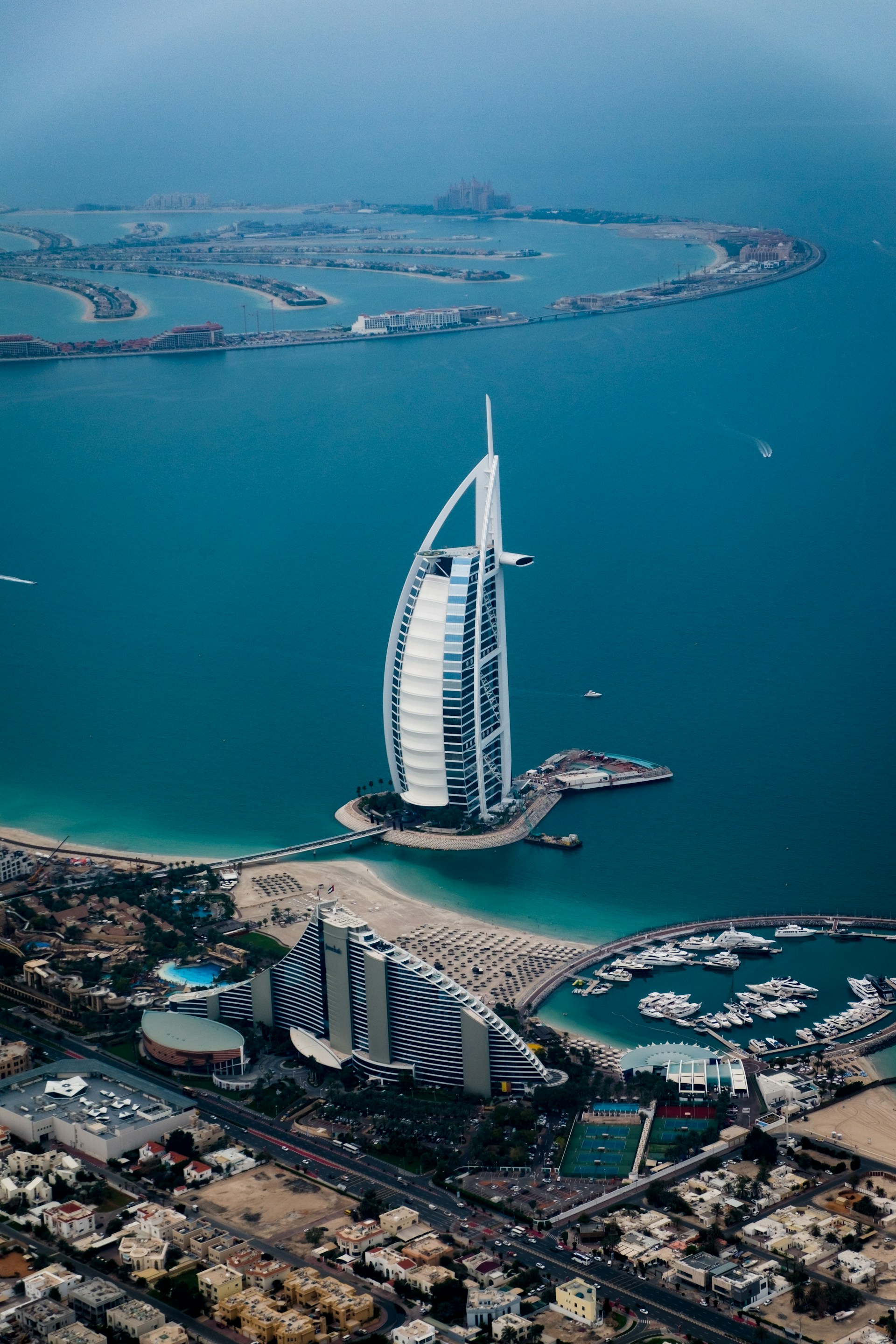
Palm Jumeirah at 25 — how the crescent is evolving in 2026 — updated view
When Nakheel's master-planned archipelago opened its trunk road in 2007, Palm Jumeirah became shorthand for ambition: signature villas, private beaches, and the
Dubai vs Abu Dhabi property — a side-by-side 2026 comparison
Dubai and Abu Dhabi sit less than 140 kilometres apart, yet their property markets could not be more distinct. Dubai has long been the region's commercial and l
Corporate relocation to Dubai — housing budgets, communities and lease structures
Dubai's corporate relocation landscape has matured considerably over the past decade, transforming from ad-hoc packages into structured frameworks that balance